
Parent Guide
What Age Should Your Child Start Gymnastics?
The short answer: start at 18 months with a parent, around age 3 for an independent class, or at age 5 and older for Level 1 rhythmic gymnastics. Later beginners still start from their current readiness. Deciding what age to start gymnastics is really choosing what she gains first — and every starting point works on building confidence. There is no single best age to start gymnastics; each starting point simply changes what she practices first.
Age by Age
What Each Starting Point Looks Like
There is no single right age — each starting point develops something different. Here is what children actually gain at each stage.
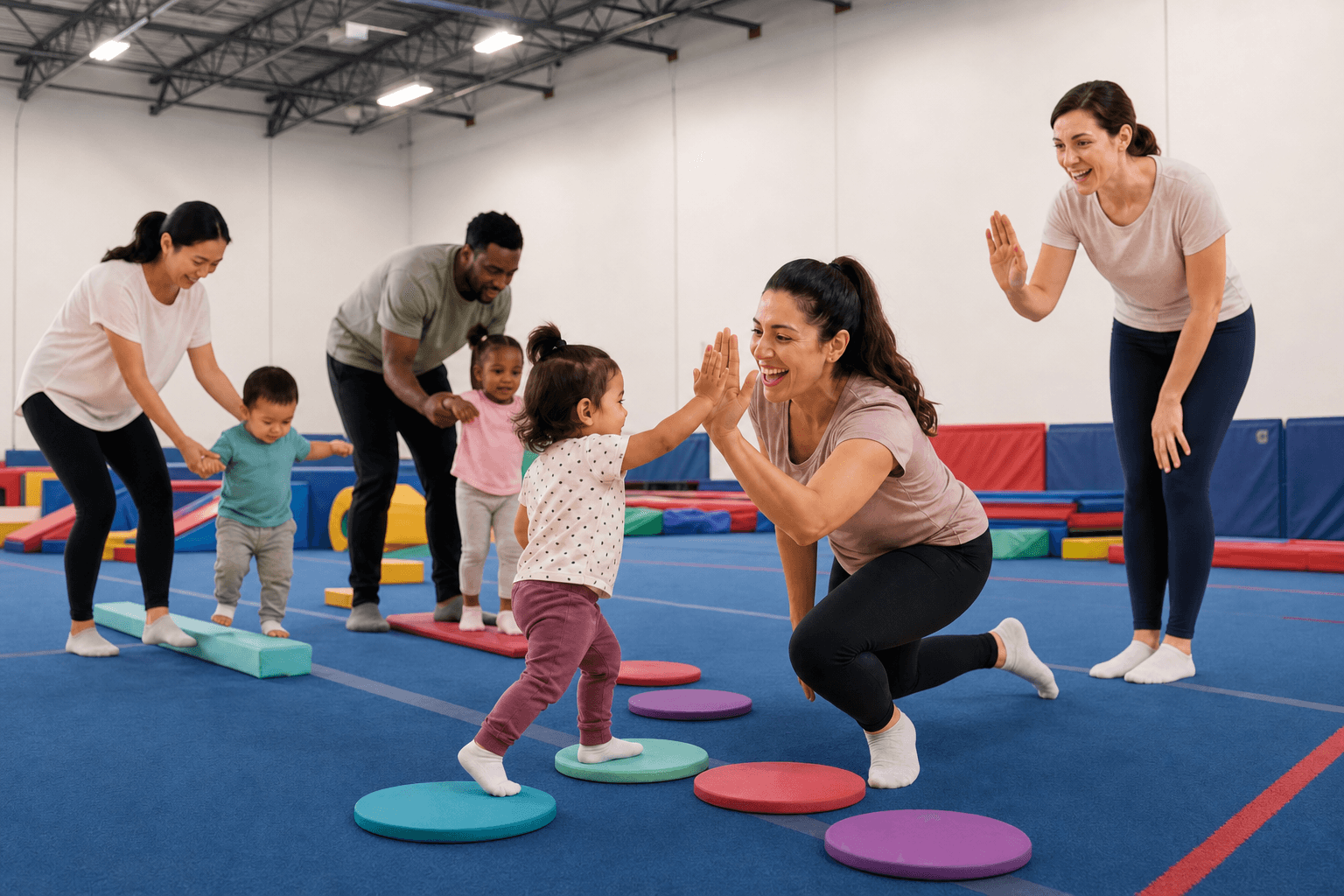
Movement with a parent
At this age the goal is not gymnastics — it is confident movement. Toddlers climb, balance, roll, and follow simple instructions with a parent on the floor beside them. They build coordination, body awareness, and the habit of being in a class.
Parent & Me →First independent classes
Around three, most children are ready to train without a parent on the floor. Classes develop balance, rhythm, flexibility, and listening skills through games and stations. This is where class habits — taking turns, following a coach — become natural.
Toddler Gymnastics →Level 1 rhythmic foundations
Level 1 teaches body alignment, flexibility, coordination, preparation for leaps, turns, and balances, plus introductory apparatus control. No prior experience is required.
Gymnastics for Kids →Use experience and consistency to find the fit
It's not too late to start — no experience needed. Athletes with rhythmic, dance, or related training can ask a coach to look at where they fit. The starting point depends on current skills and training readiness.
Compare trial and placement options →A later start
Is 9, 10, 11, or 12 too late to start gymnastics?
No — not for starting a recreational foundation at Rhythmic Art. Gymnastics for Kids begins at age 5 and remains a beginner entry point for older children. A first-time athlete is not expected to arrive with skills already learned.
An older beginner starts with alignment, flexibility, coordination, basic leaps and balances, and safe apparatus handling. The coach chooses the starting group from what the athlete can do now, including any dance, artistic gymnastics, or prior rhythmic experience.
Starting later can change a competitive timeline, but a child can still learn the sport, build a foundation, and enjoy serious training. The useful first question is whether the athlete enjoys the work and can attend consistently; a trial class gives the family and coach a real starting point.
A Coach's Honesty
Starting earlier gives time, not a guaranteed result
Starting young gives an athlete more time to practice movement, listening, coordination, and class habits. What it builds is time on the floor, not a promised level or result.
Progress comes from consistent attendance, coaching, recovery, and the athlete's interest. A later beginner may still build a strong foundation. The coach sets expectations from the athlete's current starting point.
Not sure where your child fits? That is exactly what a trial class answers — our coaches evaluate every new child and recommend the right group. You can also read what a toddler's first class looks like or what the sport develops in children.
Find the Right Starting Point
Bring your child to a trial class and our coaches will recommend the right program for their age and readiness.
Request a Trial Class