Parent Guide
The Benefits of Rhythmic Gymnastics for Kids, One by One
The benefits of gymnastics for kids look similar across disciplines — this guide walks through the rhythmic version, one by one. Children practice flexibility, alignment, coordination, focus, correction, and performance skills. Training gives each child the opportunity to build those skills at her own pace.
The Body
Physical skills athletes practice
Coaches combine body preparation, apparatus work, music, and repetition. Each athlete develops at an individual pace.
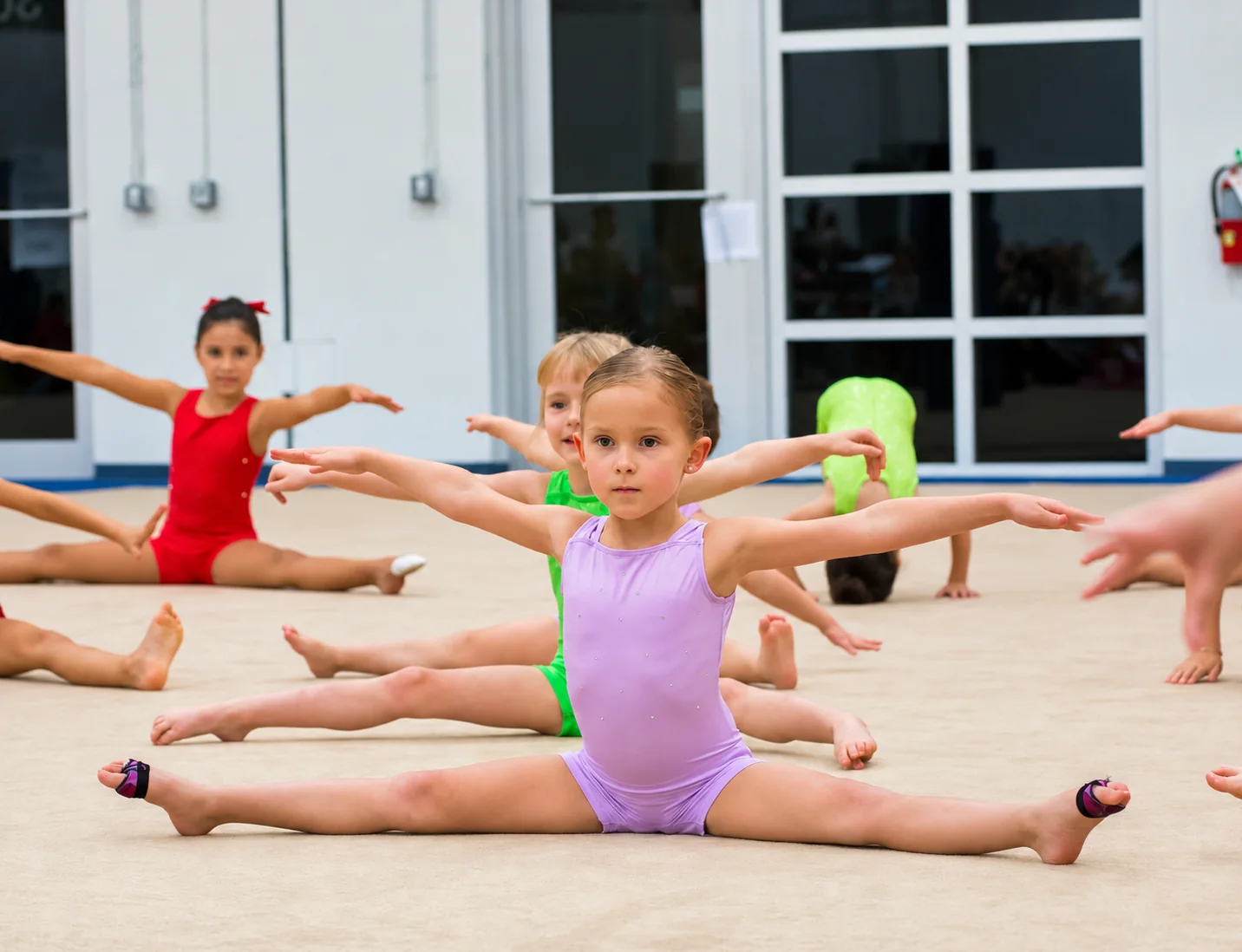
Flexibility through coached practice
Stretching, body positions, and repeated corrections give athletes a structured way to work on useful range of motion.
Alignment and body control
Ballet-based preparation asks children to hold clear positions, control transitions, and notice how the body moves.
Coordination with apparatus
Moving to music while controlling rope, hoop, ball, clubs, or ribbon asks the hands, feet, eyes, and rhythm to work together.
Strength for the sport
Bodyweight conditioning works the core, legs, feet, and balance needed for rhythmic gymnastics skills.
The Mind
Training habits athletes practice
Rhythmic gymnastics asks children to listen, remember, repeat, use feedback, and work through mistakes.
Focus and sequence memory
Learning a routine asks athletes to remember an order, listen to music, control apparatus, and respond to corrections.
Discipline built through repetition
Athletes see that a skill changes through repeated work, precise feedback, and consistent attendance.
Experience performing under pressure
Routine practice and competition ask athletes to prepare, be seen, recover after mistakes, and finish the work.
The Person
Group and competition skills
A training group around the athlete
Athletes practice individual skills while sharing corrections, standards, and preparation time with a group.
Competition behavior
Competition preparation includes respecting judges, supporting teammates, and responding to both strong and difficult results.
The honest version
Gymnastics does not fix everything, and we never promise medals. The real value is the work athletes actually practice: listening, repeating, using correction, preparing, and finishing. Curious where that work can lead? See how the competitive levels work.
Let Her Try It
One trial class tells you more than any article. Our coaches will meet your child, see how she responds to the class, and recommend the right starting group.
Gymnastics for girls builds more than the visible skills. Read what training builds inside her — how athletes practice effort, correction, preparation, and returning after mistakes — then see the Level 1 girls gymnastics program where beginners ages 5 and older start.
Request a Trial Class