
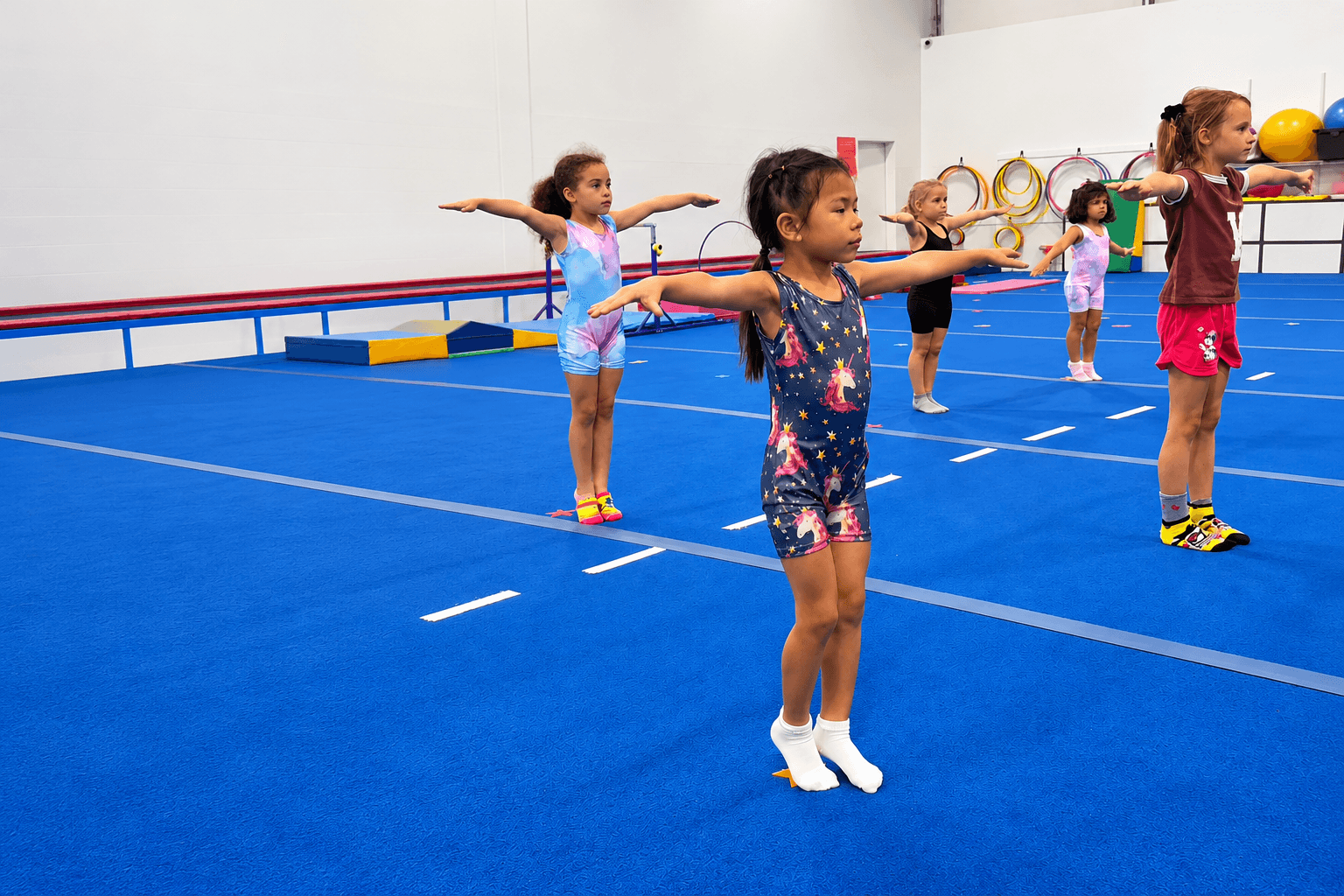
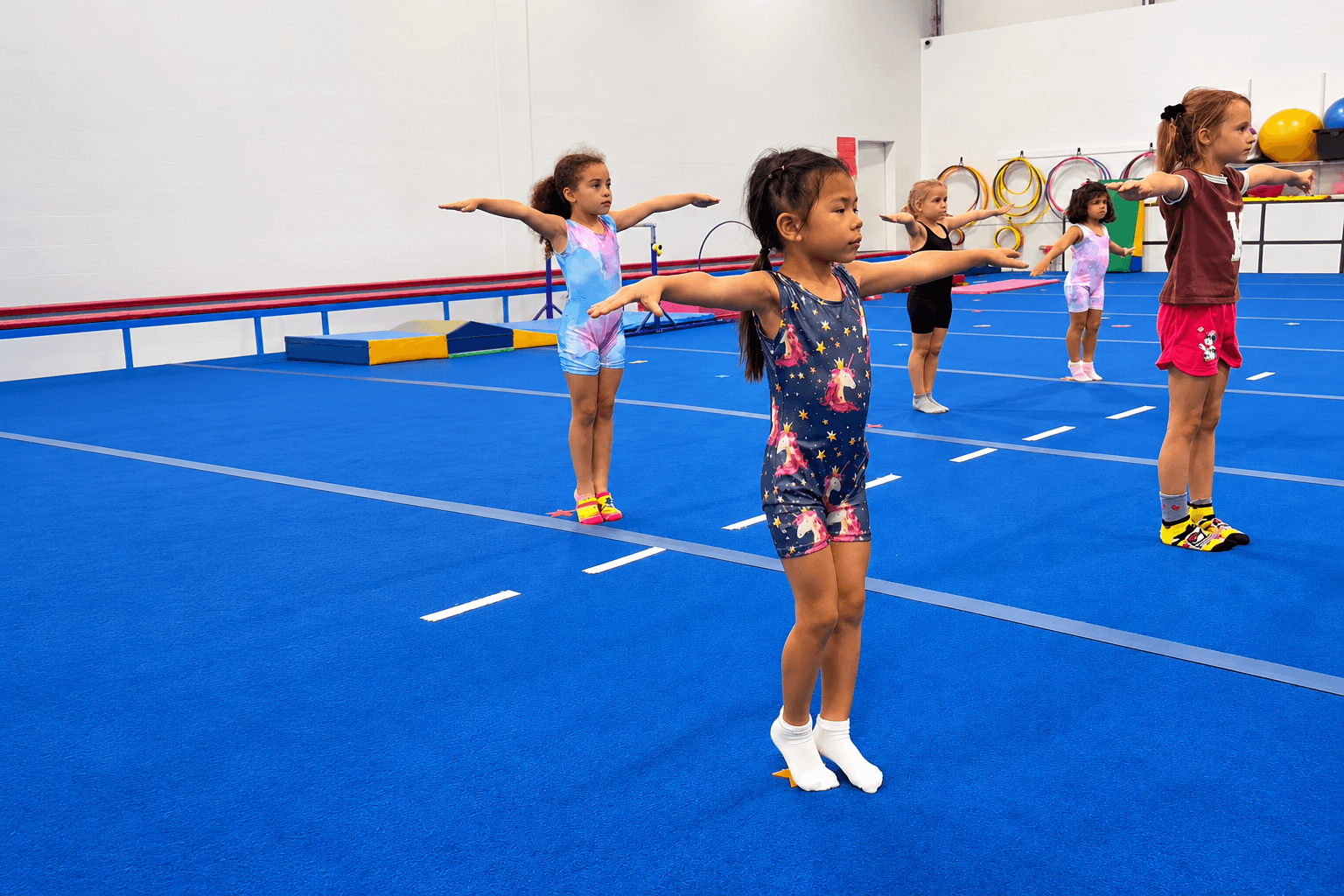
Level 1 · Beginners
Girls Gymnastics for Kids: Beginner Classes for Ages 5+
For beginners ages 5 and older, girls gymnastics at Rhythmic Art starts with our kids gymnastics classes. No experience is needed.
Choosing for ages 3 to 5? Compare Toddler Gymnastics
Rhythmic gymnastics is movement, dance, and music with a hoop, ball, or other hand-held equipment.
Request your free first class- Beginners age 5, 6, 7 and upno experience needed
- First class free
- 1, 2, or 3 times a weekno contracts, month to month
- Start any day or timeno waiting for a new season
Want to join the competitive gymnastics team? See Competitive Gymnastics
The goal of Level 1
Your child practices real gymnastics skills: hears a correction, tries again, and gets better.
It is the first step toward the competitive team, for girls who want more.
Can my 5-year-old start gymnastics?
Yes. Level 1 is the beginner class for girls age 5, 6, 7, 8 and up. Gymnastics for 5 year olds starts here, in a 60-minute class with other beginners.
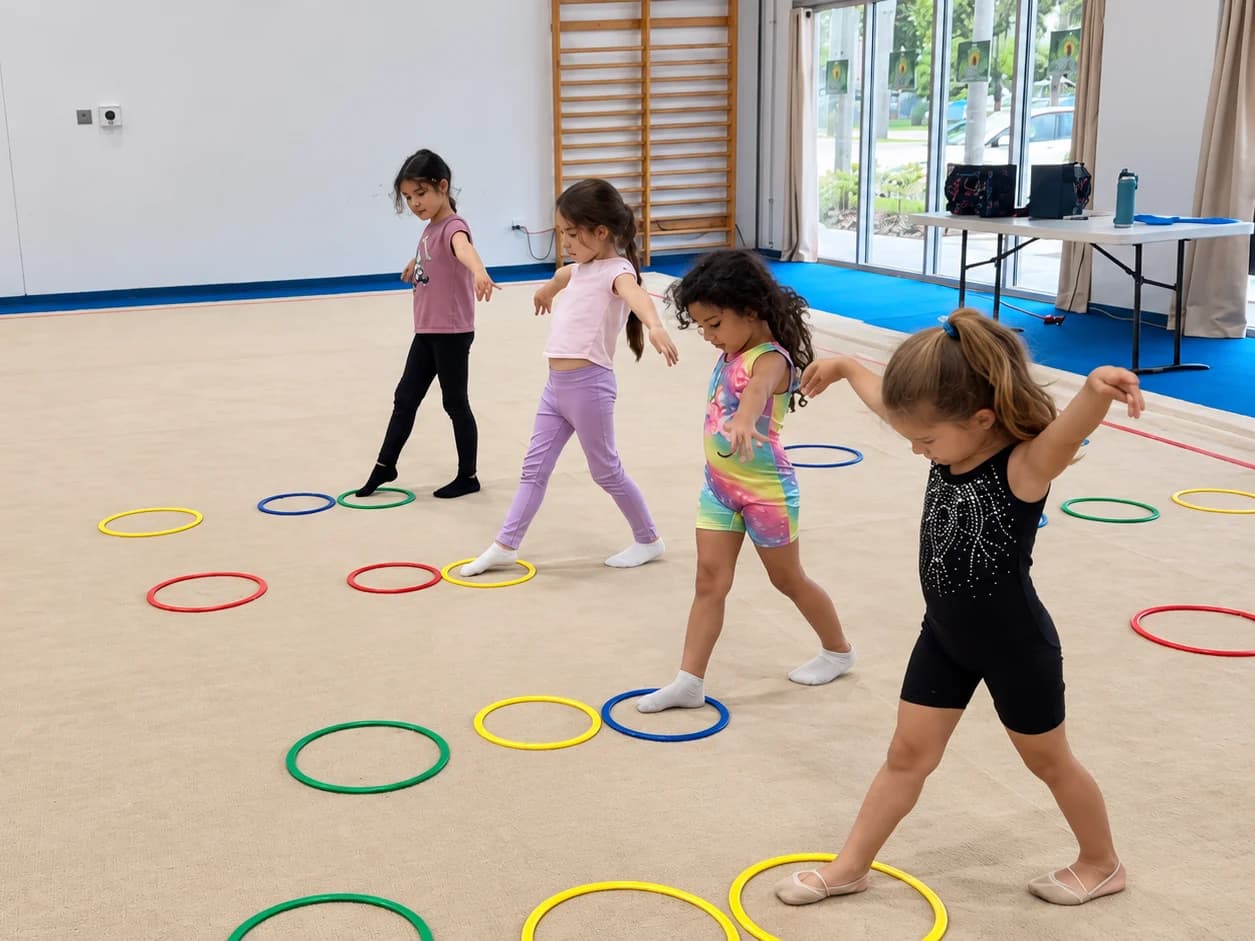
Starting at 9, 10, 11, or 12?
It's not too late — no experience needed
Girls start gymnastics here at 9, 10, 11, and 12 as complete beginners, and Level 1 is built for exactly that. Teen beginners can start gymnastics in Level 1 too. The current self-service trial serves ages 5 through 18. Older beginners can contact us so we can recommend another option. No skills are expected on day one: training starts with body alignment, flexibility, coordination, and apparatus basics, and the coach places each girl in a group by age and readiness. Danced or done gymnastics before? Ask about a placement review.
Started later and want to compete? There is a path for that too: Rhythmic Xcel, made for girls who are new to the sport. Ask the coach about it. Compare Level 2, Level 3, and Rhythmic Xcel
Kids gymnastics with dance, music, and apparatus
Our kids gymnastics classes are rhythmic gymnastics: dance and music with a ribbon, hoop, ball, rope, or clubs.
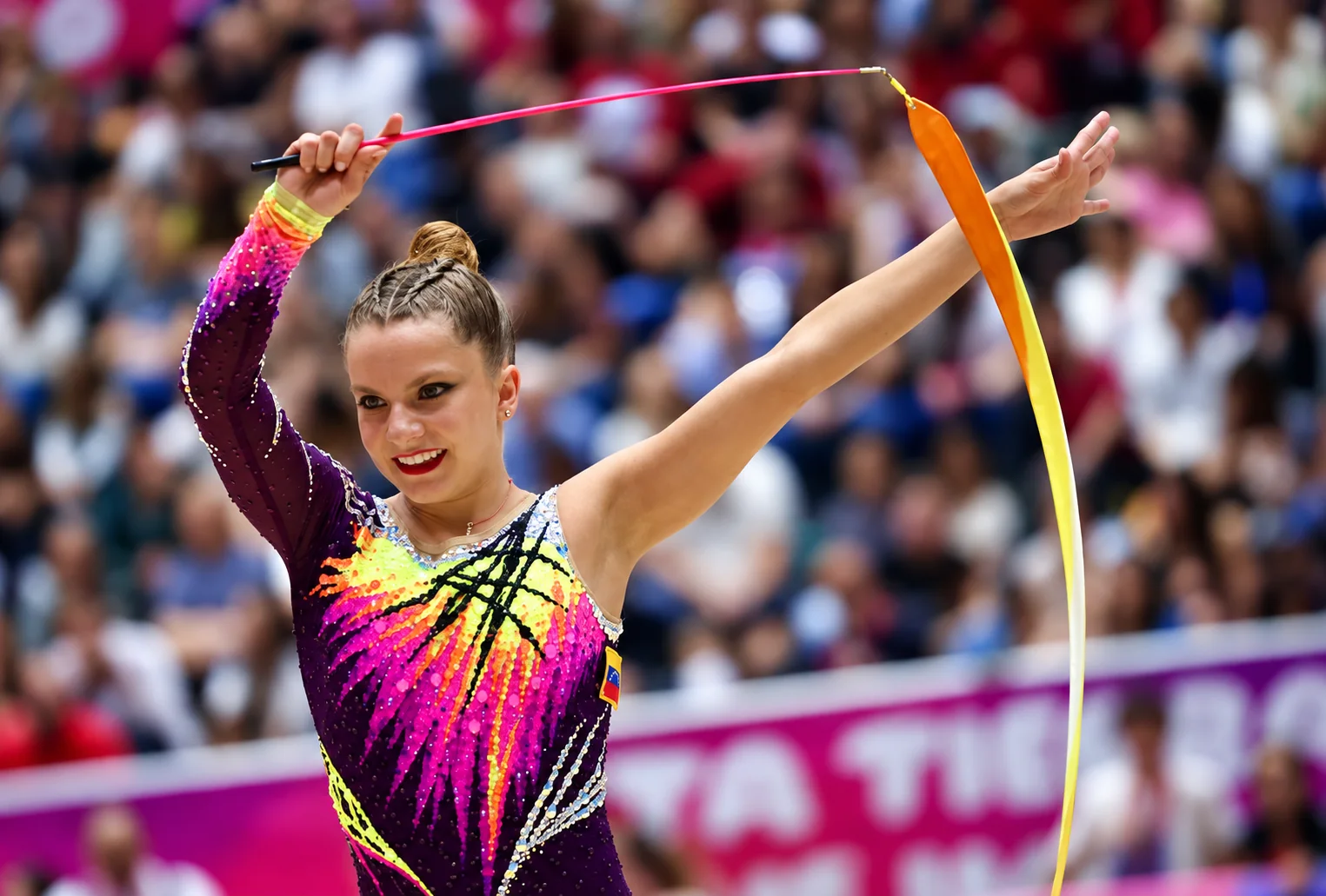
Kids gymnastics builds artistry from rhythm, posture, expression, music, and apparatus working together.
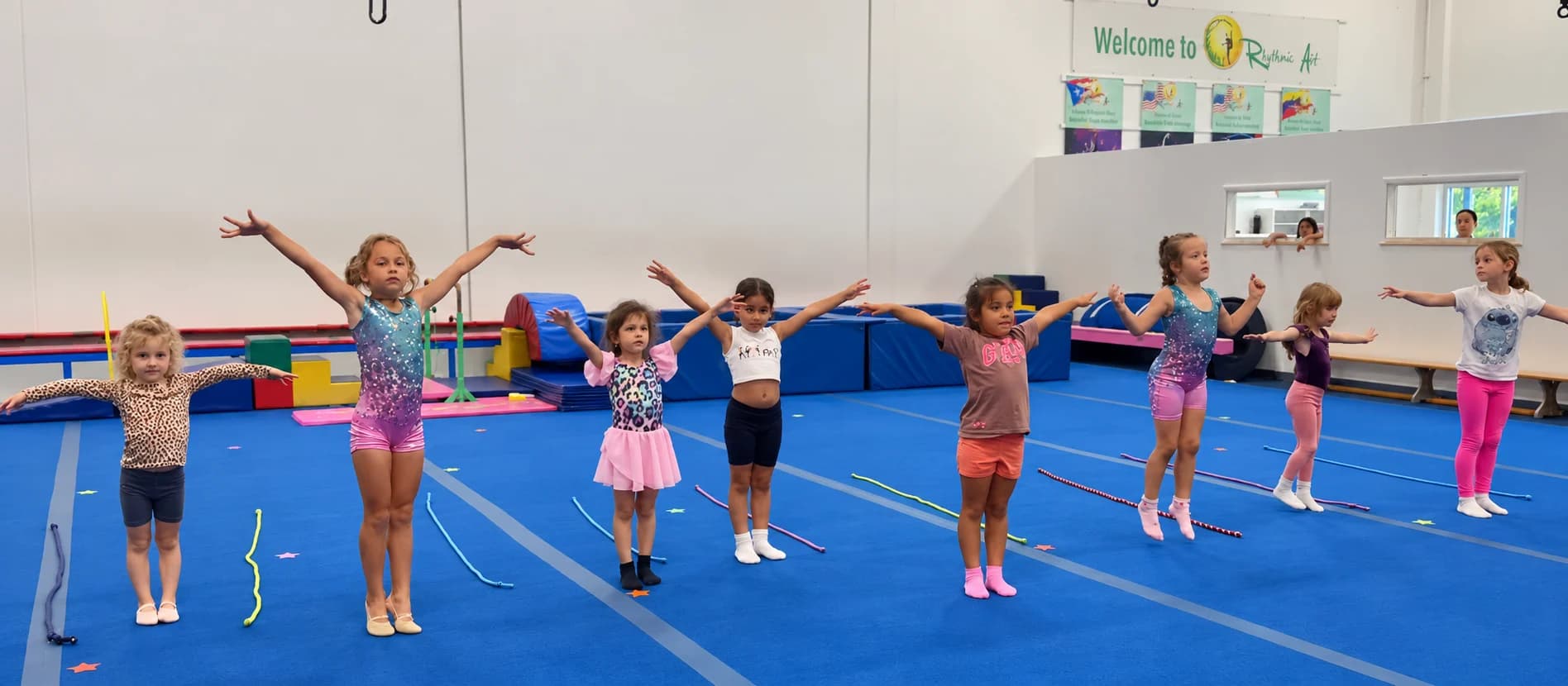
Level 1 teaches coordination, stretching and flexibility, following directions, acrobatics, basic gymnastics, and ball and rope work.
Training includes strength, flexibility, balance, coordination, conditioning, posture, and movement control.
- Rope
- Hoop
- Ball
- Clubs
- Ribbon
See a real class
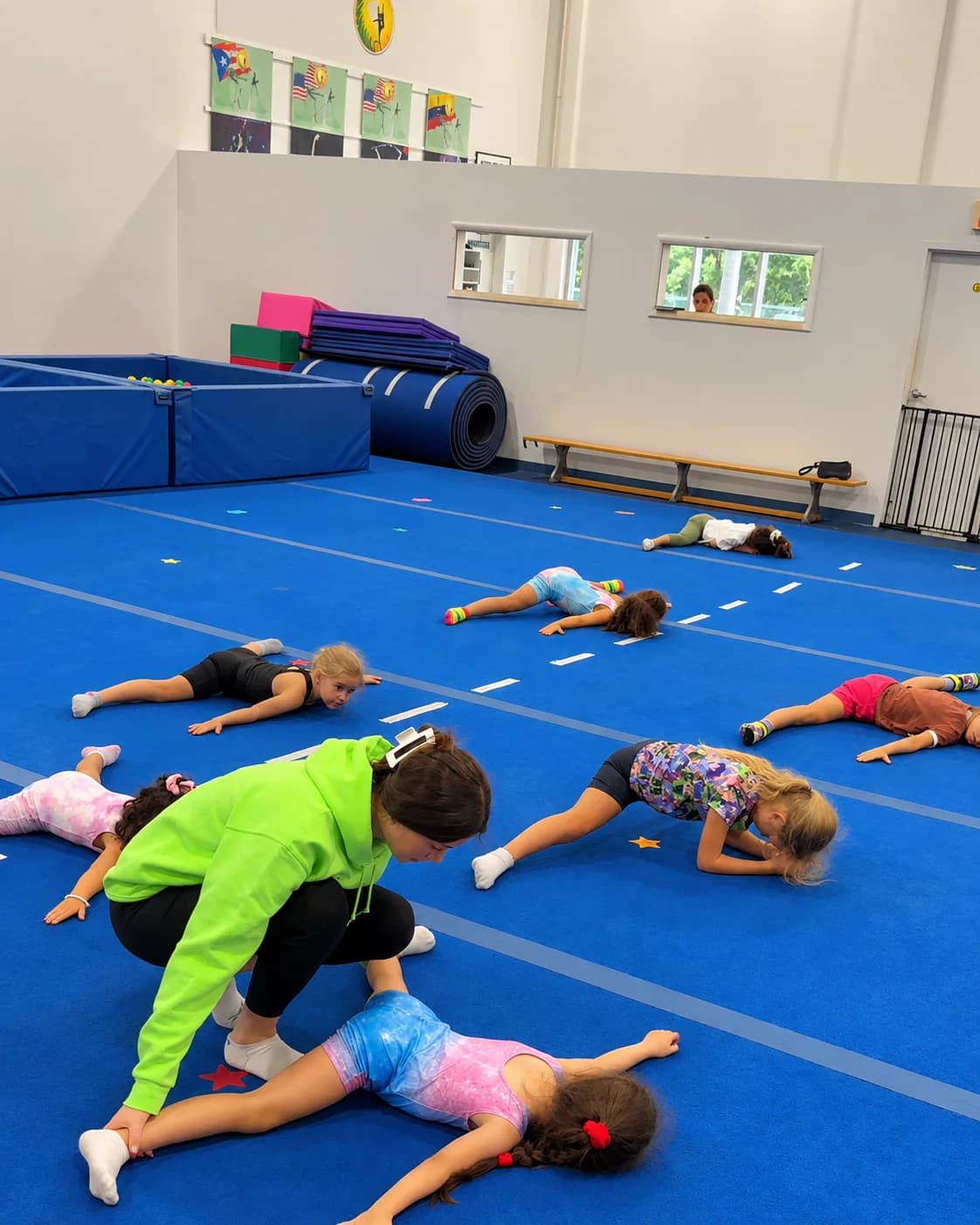
Our gymnastics classes for beginners run 60 minutes, led by a coach.
Short clips from our classes, August 2026. Tap to play.
First class? See what to expect: what to bring, how the class runs, and where you watch.Safe for beginners, hard in the right way
In Level 1 gymnastics, hard means an age-appropriate challenge: listen to a correction, make an adjustment, repeat with care, and recover.
- Soft-carpet trainingGirls train on a soft carpet, close to the floor.
- One step at a timeEvery skill, acrobatics too, starts simple and builds up.
- Coach-led classesTaught by our team of dedicated coaches.
Level 1 class times
Pick a class time that fits your week
12 beginner gymnastics classes every week, Monday to Saturday. Each class is 60 minutes. Pick the times that fit and switch any week: Tuesday this week, Saturday the next.
Mon
Tue
Wed
Thu
Fri
Sat
Schedule updated .
- How much
Tuition for recreational gymnastics classes depends on the number of training days a week.
See gymnastics prices and fees- Where
301 Bryan Rd, Dania Beach, FL 33004
Get directions(opens Google Maps)
How often to train: 1, 2, or 3 days a week
Level 1 is recreational gymnastics.
Talent or not, hard work is what we're after.
Talent is great. Most of the time, consistency and dedication make the difference. Here, girls learn to enjoy training really hard, a habit that helps far beyond the gym.
Start with one day a week and add days when you are ready.
- 1 day a weekWhere most girls begin
- 2 days a weekLess time between classes
- 3 days a weekThe rhythm Level 2 asks for
- No contracts, month to month
- Regular training is a must
- Gym closed for a holiday? Use another class that month
Next stage · Level 2
Ready for the competitive team when your child shows:
- Dedication: comes to train, not just to try
- Discipline: works on every correction
- Consistency: trains 3 days a week, every week
The schedule changes too. On the team, the coach sets the days and times, and families commit for at least 3 months. Some levels train 3+ hours at a time.
The team trains in our competitive gym, on two Olympic-size carpets, 42 by 42 feet each.
Every child gets there at their own time. Dedication, discipline, and consistency take time to build. Think your child is ready? Ask the coach for a try-out. See how Level 2, Level 3, and Rhythmic Xcel work
See the competitive teamReady to try Level 1?
We confirm the class time by email, usually within 24–48 hours.