Parent guide
Types of Gymnastics: Artistic, Rhythmic, and More
Gymnastics is a family of sports, not one sport. Here is the whole family in plain terms, and a closer look at the one we teach.
How many types of gymnastics are there?
The international gymnastics federation (FIG) runs seven gymnastics sports: artistic, rhythmic, trampoline (with tumbling), acrobatic, aerobic, parkour, and Gymnastics for All. Artistic holds separate men's and women's competitions, so some lists count eight. Three are in the Olympic Games: artistic, rhythmic, and trampoline.
The big question
Rhythmic vs artistic gymnastics
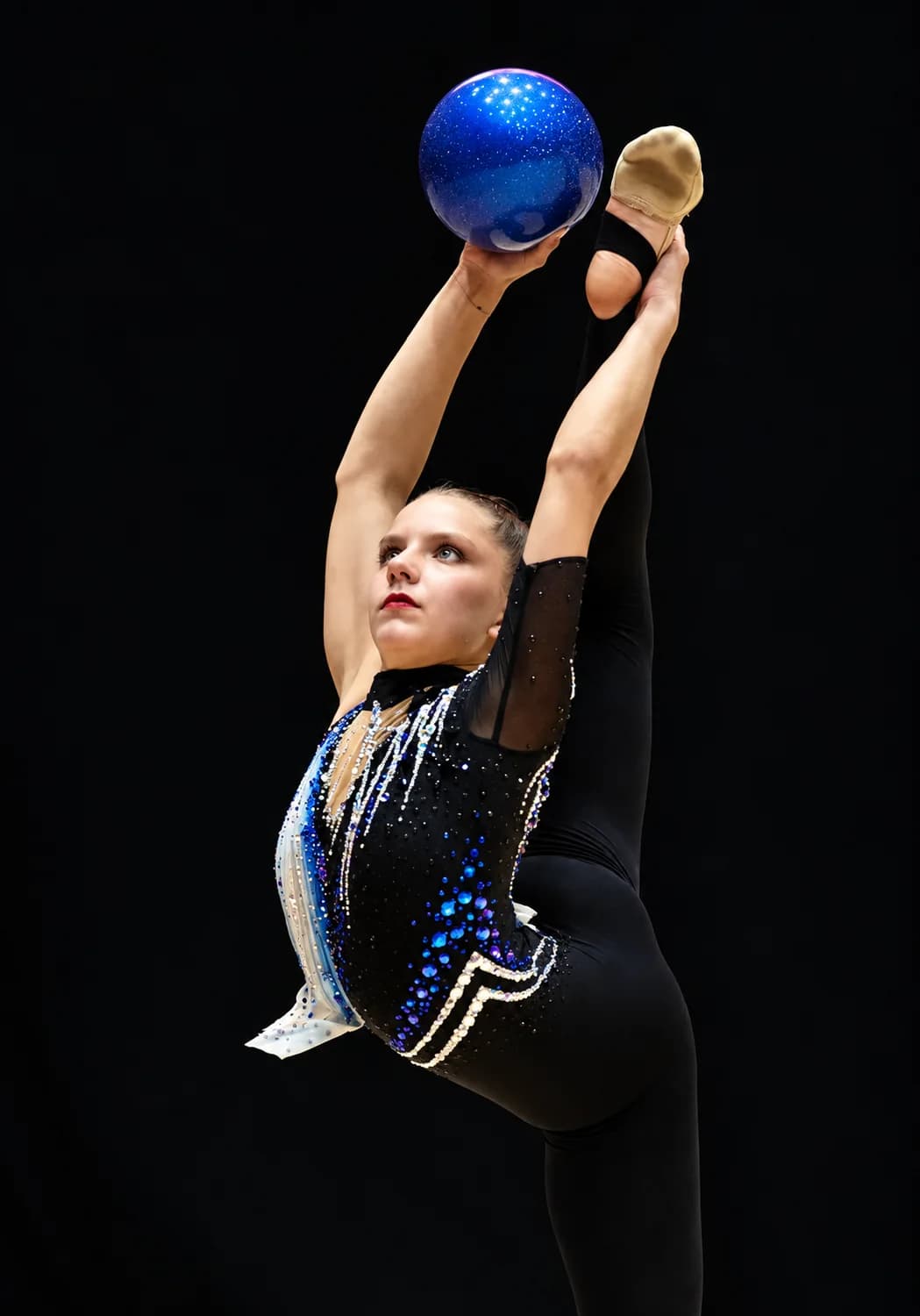
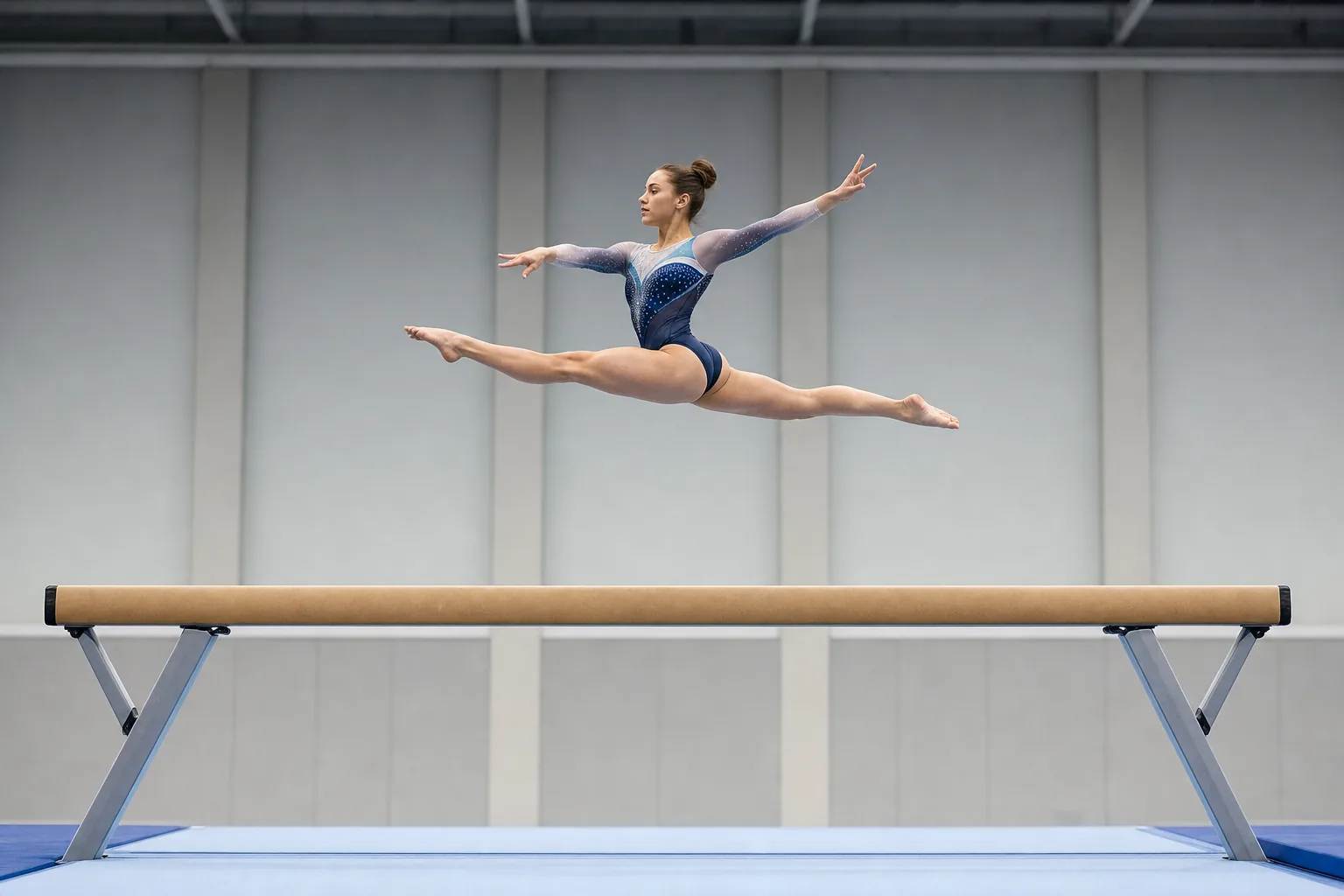
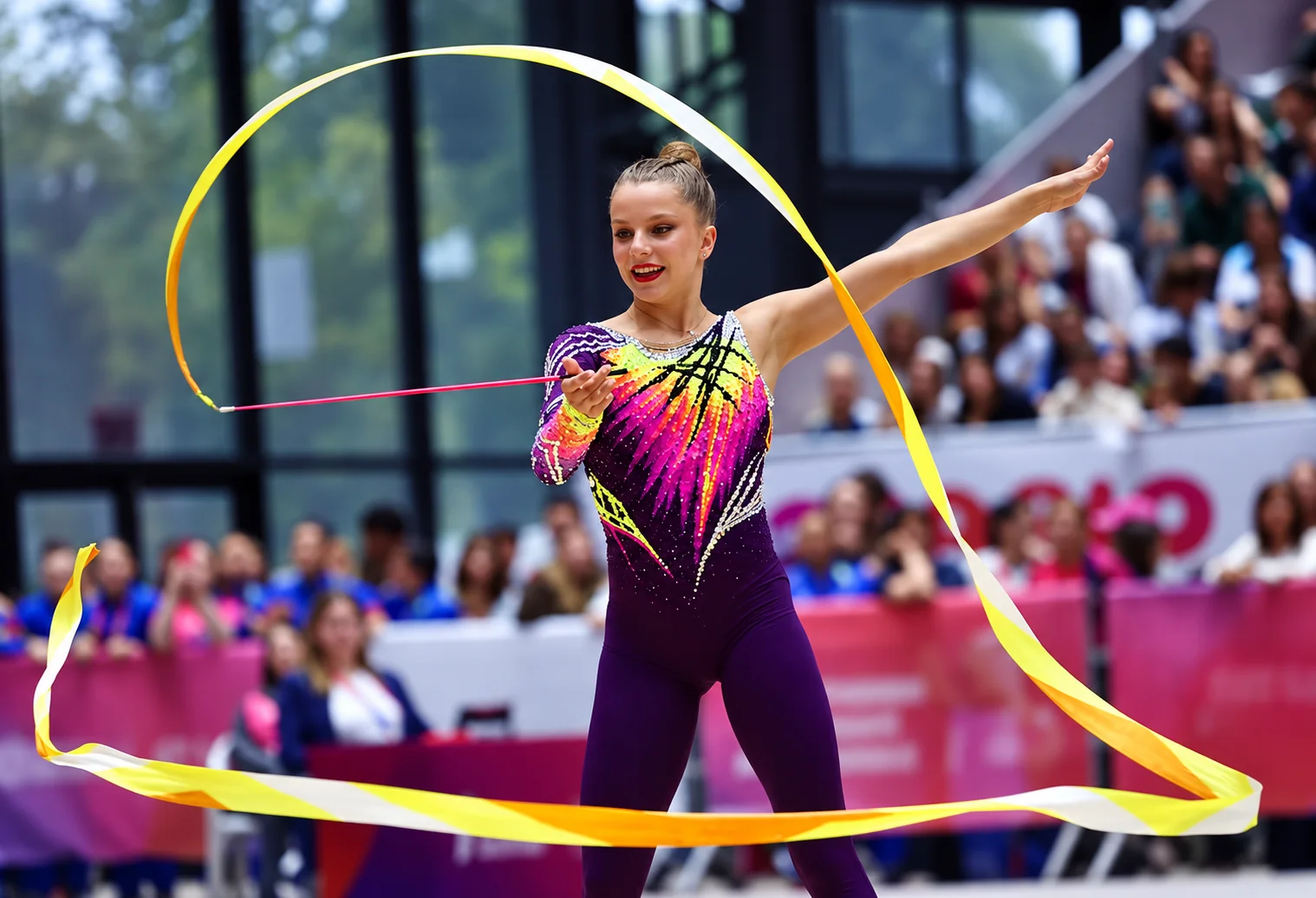
Rhythmic: Jimena Dominguez, Rhythmic Art, South American Games, Santa Fe 2026. Artistic: an illustration.
The rhythmic vs artistic gymnastics question comes down to this: where artistic gymnastics is built on power, rhythmic gymnastics is built on flexibility, coordination, and expression, with every routine set to music.
In an artistic vs rhythmic gymnastics comparison, the equipment is the easiest difference to see: artistic events use bars, beam, vault, and floor, while rhythmic routines use five hand apparatus.
| Rhythmic | Artistic | |
|---|---|---|
| Equipment | Rope, hoop, ball, clubs, ribbon | Women's events: vault, bars, beam, floor |
| Music | Every routine | Only the women's floor routine |
| Built on | Flexibility, coordination, expression | Power and acrobatics |
| In the Olympics | Since 1984; group routines added in 1996 | Since 1896; women since 1928 |
| Known for | Choreography and apparatus handling | Big tumbling passes, swings, and vaults |
The whole family
The main types of gymnastics, one line each
The rhythmic photo shows Jimena Dominguez of Rhythmic Art at the South American Games, Santa Fe 2026. The other images are illustrations.
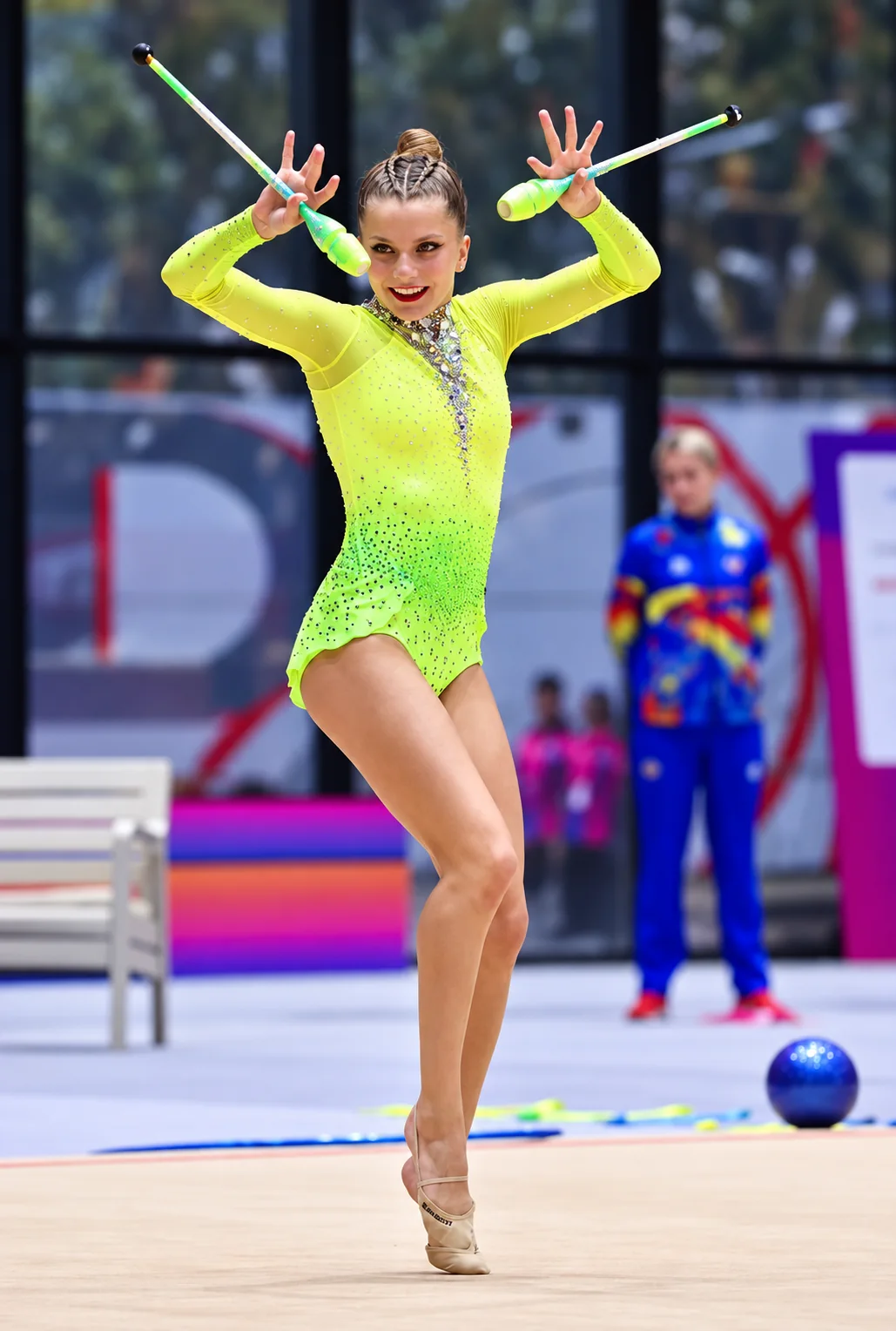
Rhythmic Gymnastics
We teach thisPerformed to music with rope, hoop, ball, clubs, and ribbon, blending ballet, dance, and athletics. Olympic.
Artistic Gymnastics
Vault, bars, beam, and floor, built on power and acrobatics. Olympic, and the form most parents picture.
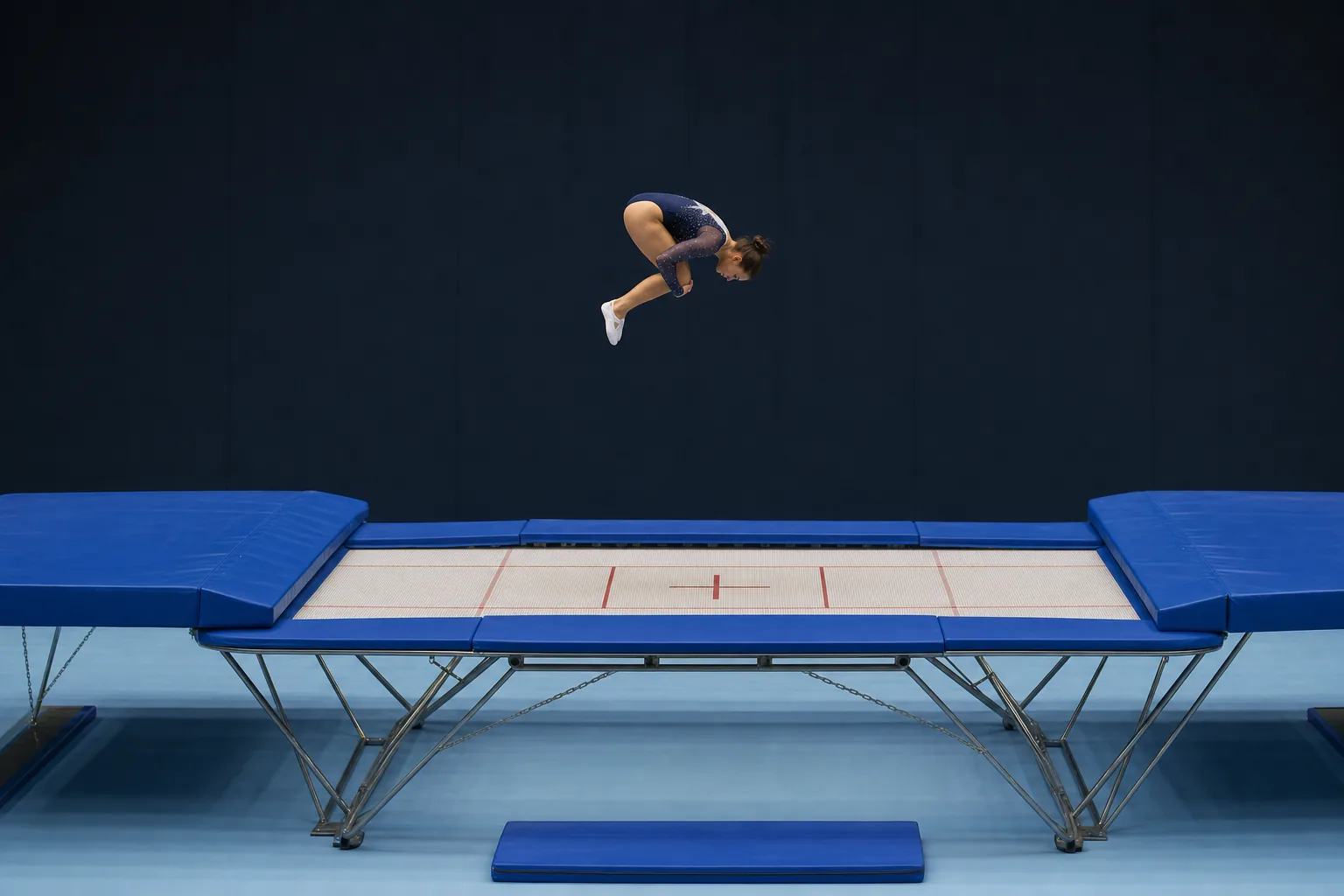
Trampoline Gymnastics
High flight, somersaults, and twists on trampoline, double mini-trampoline, and tumbling. Olympic since 2000.
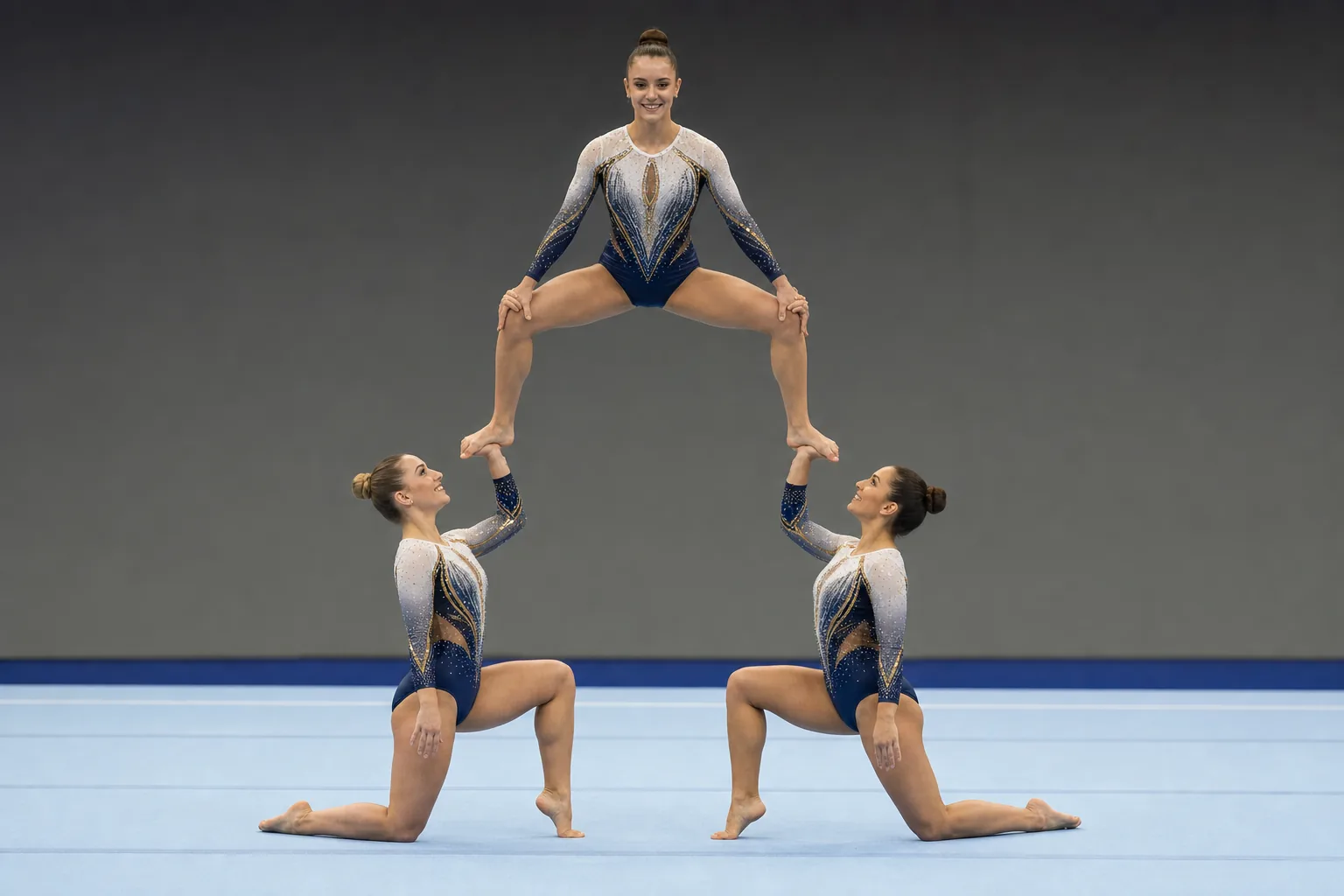
Acrobatic Gymnastics
Pairs and groups lift, balance, and throw each other in choreographed routines, with no apparatus.
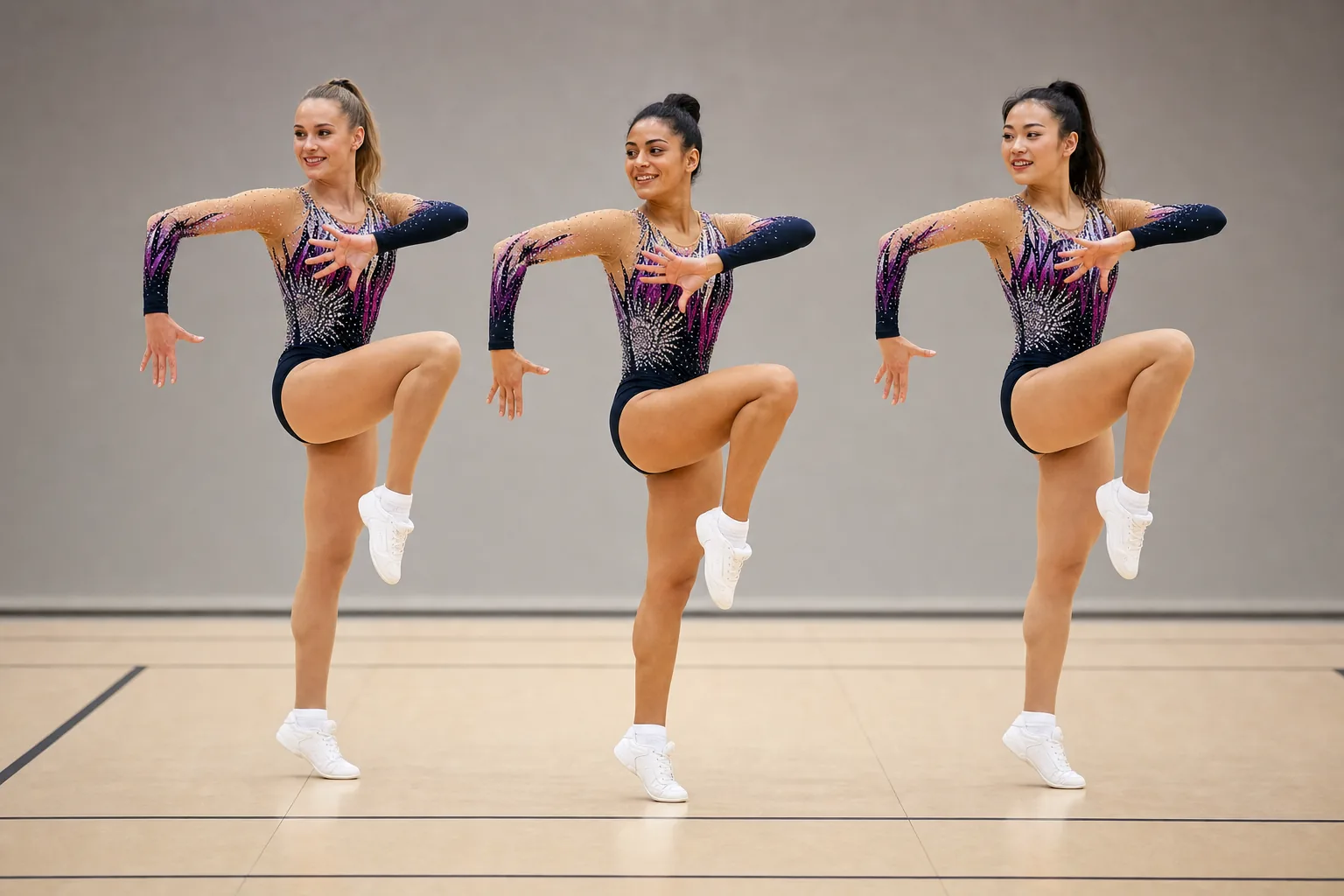
Aerobic Gymnastics
Continuous, high-intensity movement patterns performed to music.
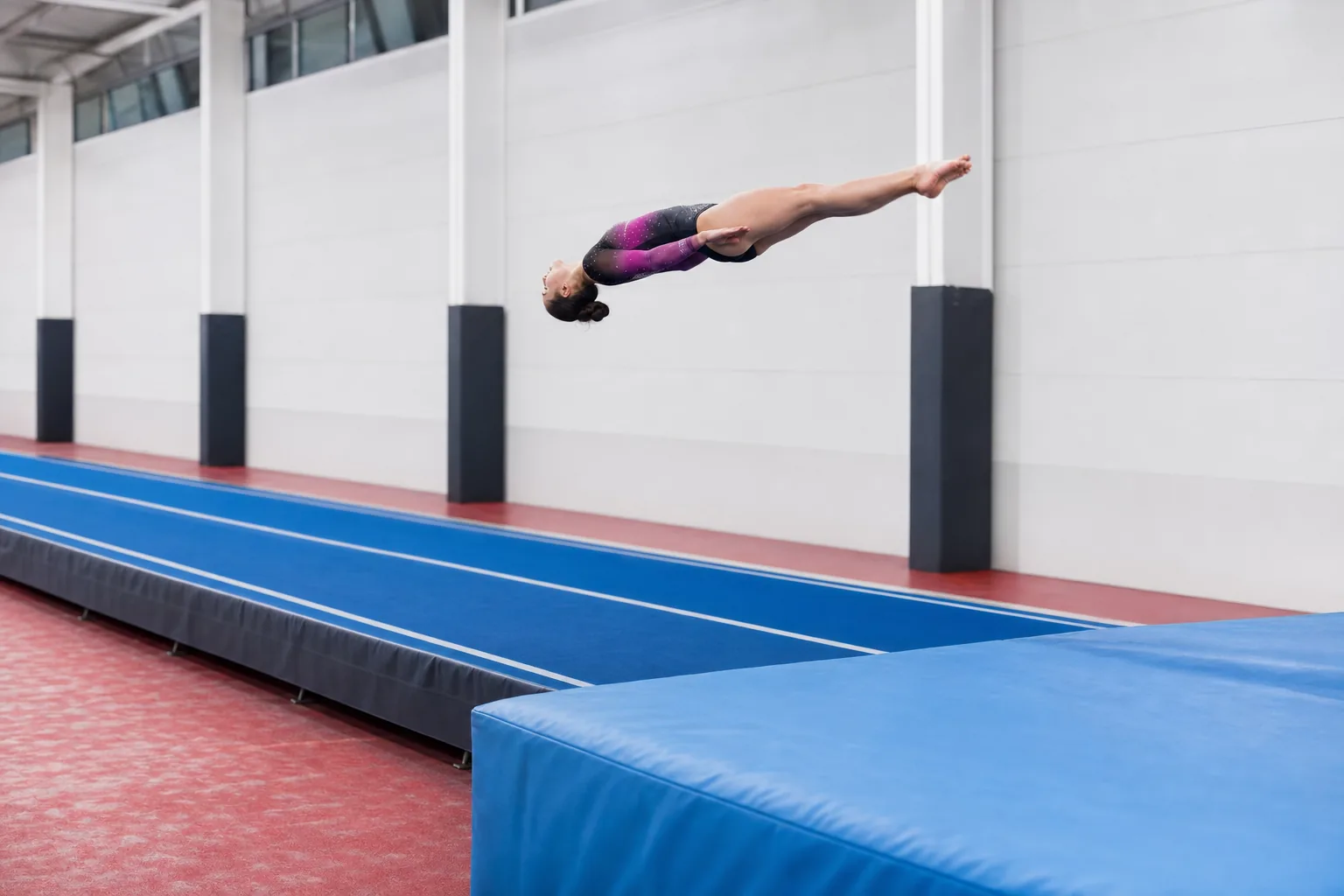
Power Tumbling
A straight run of explosive flips and twists down a sprung track; part of trampoline gymnastics.
Parkour and Gymnastics for All complete the seven FIG sports; power tumbling is part of trampoline gymnastics.
Also asked
Gymnastics vs tumbling, acro, dance, and cheer
Tumbling vs gymnastics
Tumbling is the flips-and-handsprings part of gymnastics. Artistic gymnasts tumble on the floor, and power tumbling down a sprung track is its own competition within trampoline gymnastics. Rhythmic gymnastics centers on music, flexibility, and hand apparatus instead.
Acro vs gymnastics
Acro usually means acrobatic dance, a dance class with tumbling tricks. Acrobatic gymnastics is a separate competitive sport: pairs and groups balance, lift, and throw each other, with no apparatus. Artistic gymnasts perform one at a time on vault, bars, beam, and floor. Rhythmic gymnastics shares the flexibility and the music, and adds hand apparatus.
Dance vs gymnastics
Dance centers on performance and expression, while gymnastics routines are scored against a code of points. Rhythmic gymnastics is where they meet: ballet is a standard part of training, and routines are choreographed to music.
Cheer vs gymnastics
Cheer is a team sport built on stunts, jumps, and tumbling, performed on the sidelines and in its own competitions. Rhythmic gymnasts compete alone or as a group, and judges score each routine against a code of points.
A closer look
What makes rhythmic gymnastics different
What is rhythmic gymnastics? An Olympic discipline since 1984, where competitive routines combine music, body skills, and apparatus, with difficulty and artistry both part of the sport.
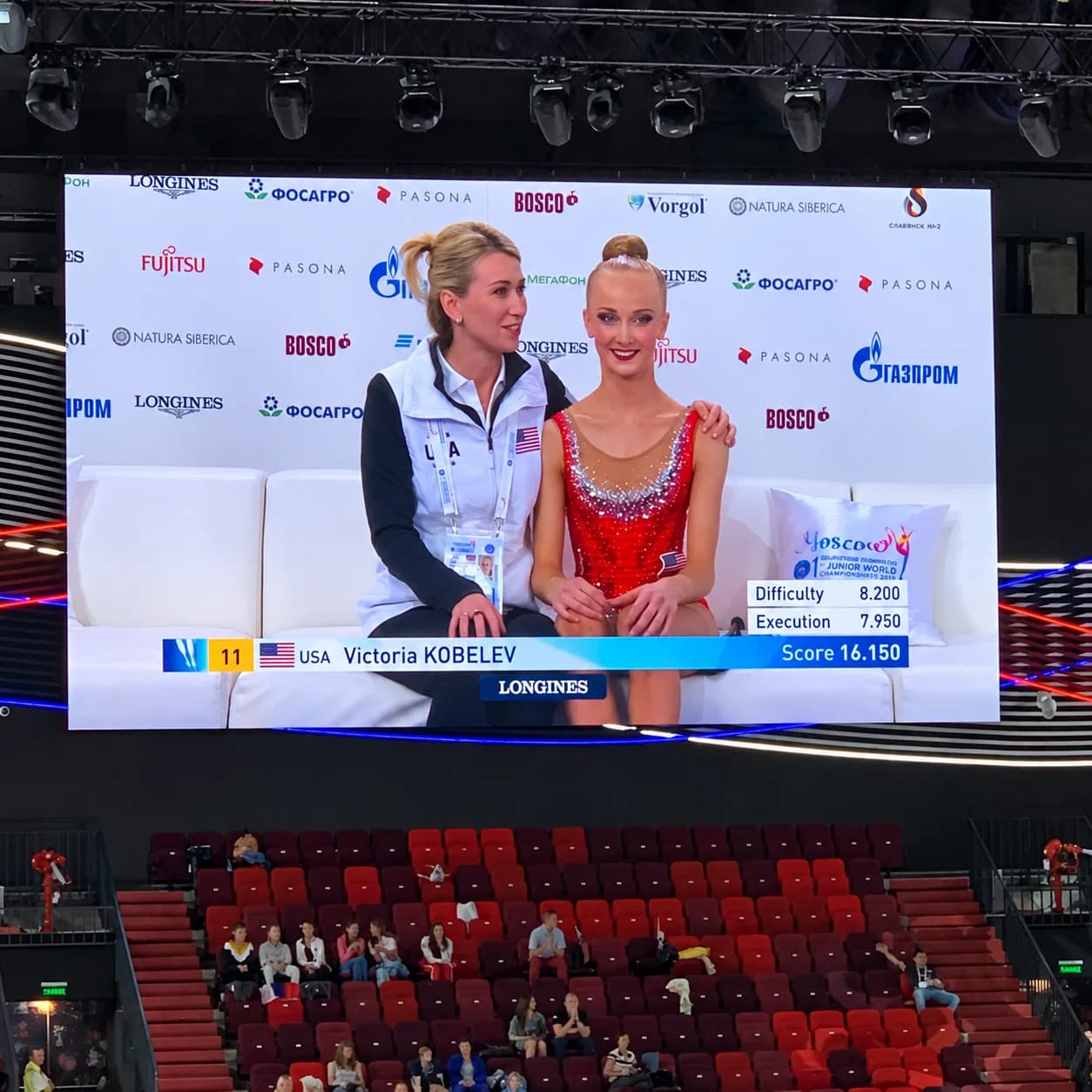
How did rhythmic gymnastics start? It grew out of European group-gymnastics traditions, held its first World Championships in 1963, and joined the Olympic Games in 1984.
- 1963First World Championships
- 1984Becomes an Olympic sport
- 1996Group routines added at the Olympics: several gymnasts perform one routine together. Solo routines continue.
The five apparatus
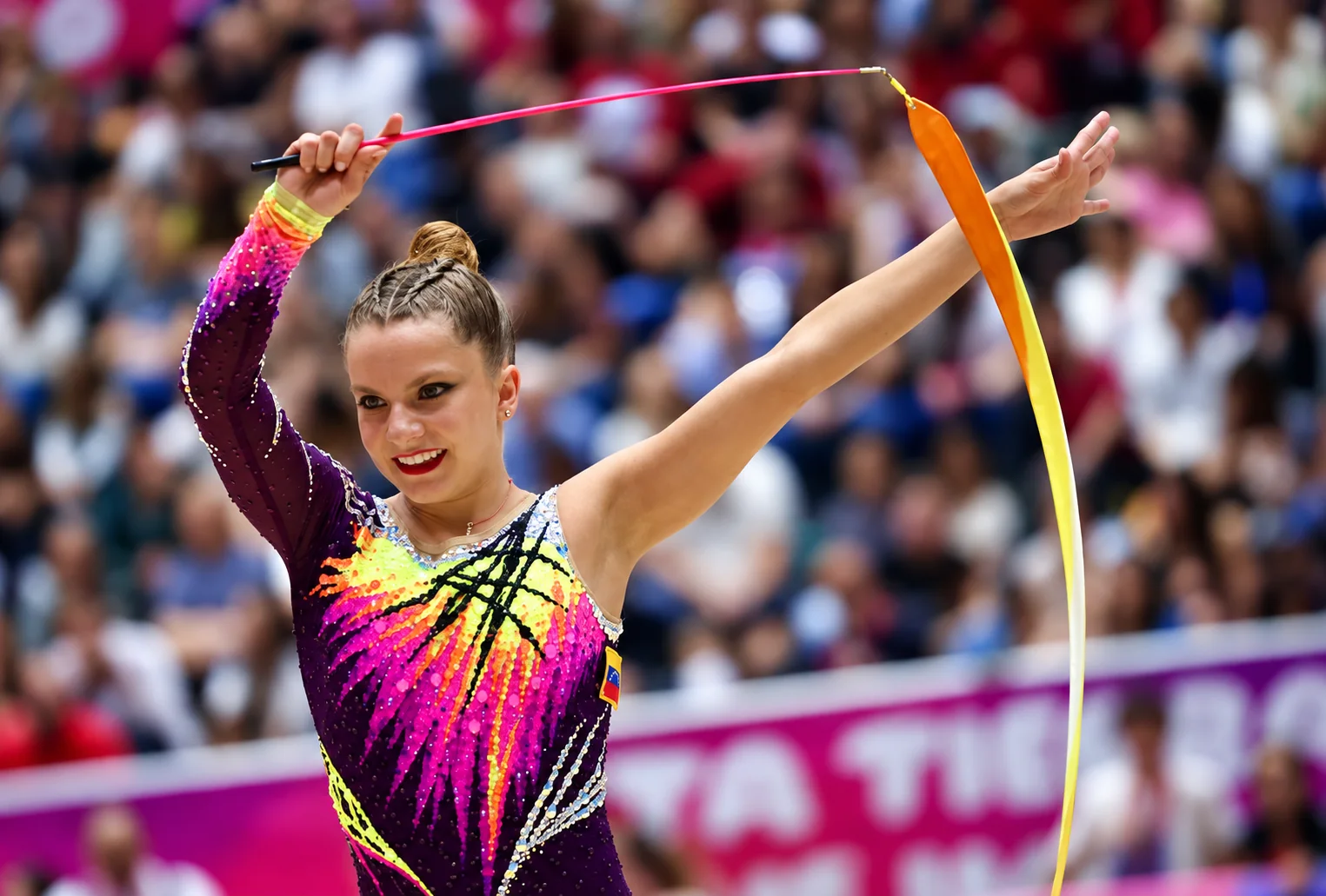
The rhythmic gymnastics apparatus are rope, hoop, ball, clubs, and ribbon — used in solo routines and in group routines, where several gymnasts perform together.
Ribbon 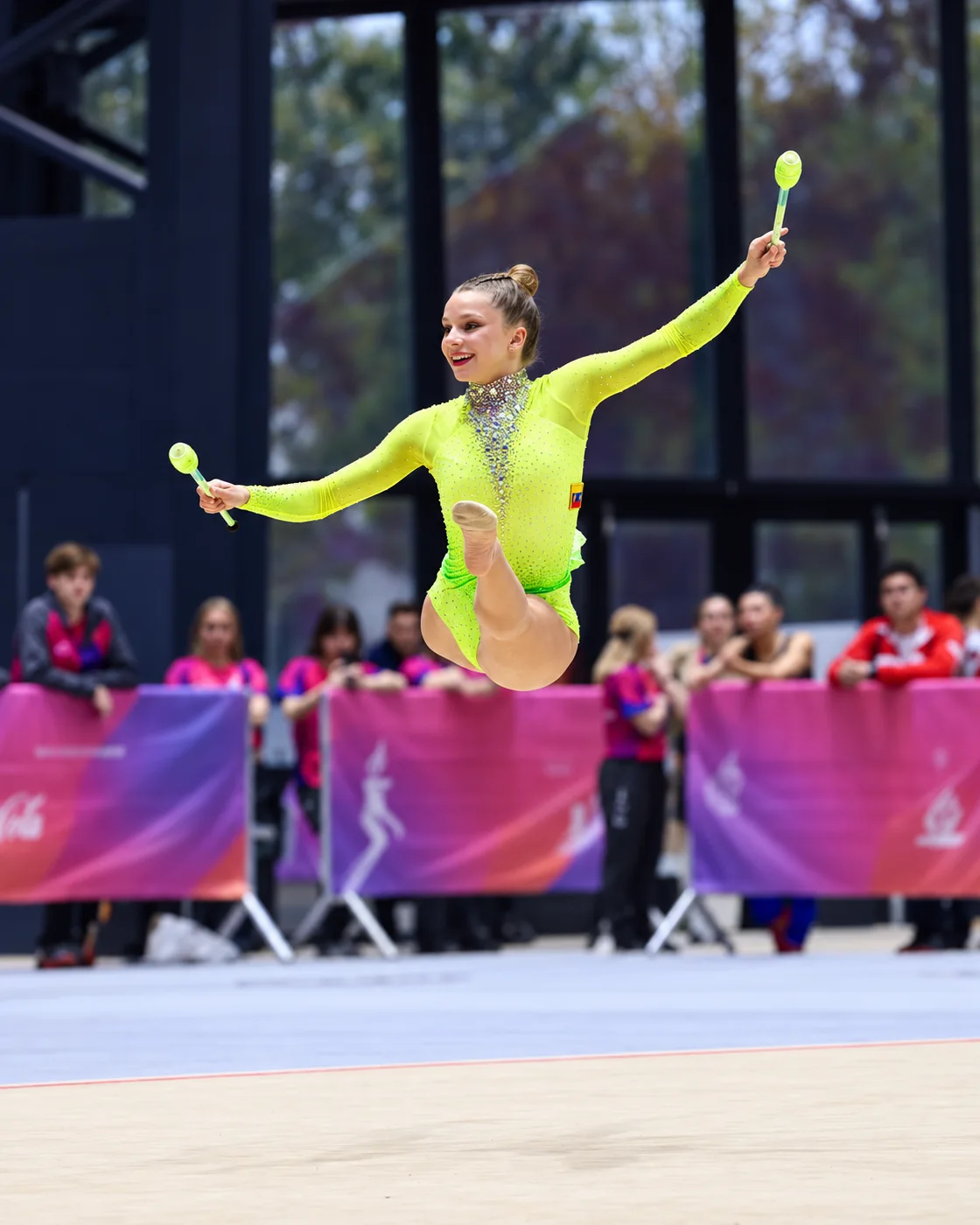
Clubs 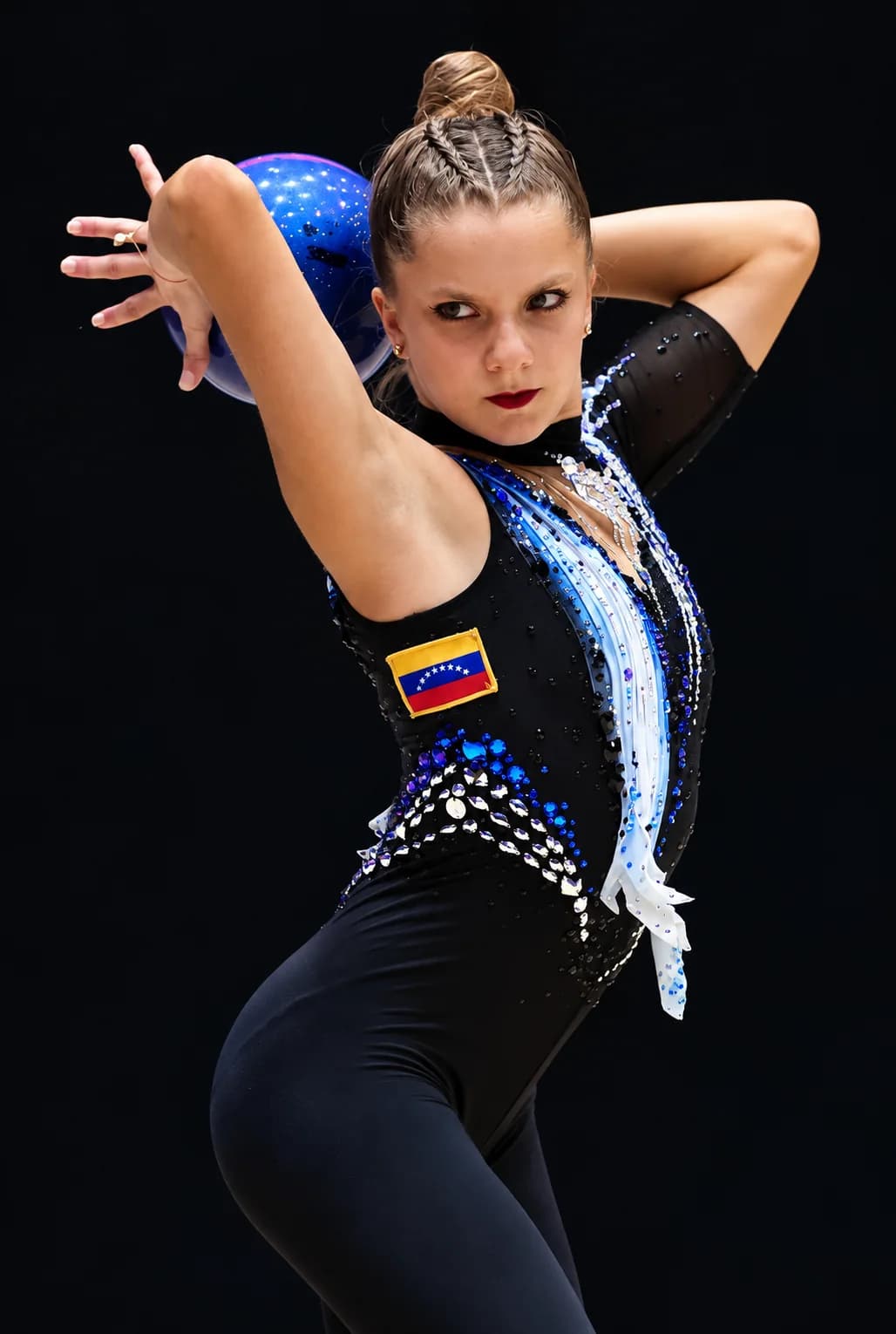
Ball
Jimena Dominguez, Rhythmic Art, at the South American Games, Santa Fe 2026.
Curious how children actually progress in this sport? Read how the competitive levels work or see what age is right to start.
Try rhythmic gymnastics with a free first class
Families often choose rhythmic gymnastics for children who enjoy music, dance, detailed movement, and apparatus. The first class is free for new beginners and shows whether your child enjoys this training style. If you are deciding where to learn rhythmic gymnastics in South Florida, our training center in Dania Beach teaches this one discipline exclusively.