Parent Guide
Why Train? What Rhythmic Gymnastics Builds in a Girl
Parents comparing sports for girls ask us a fair question: why train at all? Not every child will compete, and not every family wants trophies. This page is our answer — what serious training is designed to build inside a child, and why it stays with her long after the routines are forgotten.
Why train at all
Two Things She Keeps for Life
Parents ask which are the best sports for girls. Our answer starts with what she keeps: her mental strength and her physical foundation.
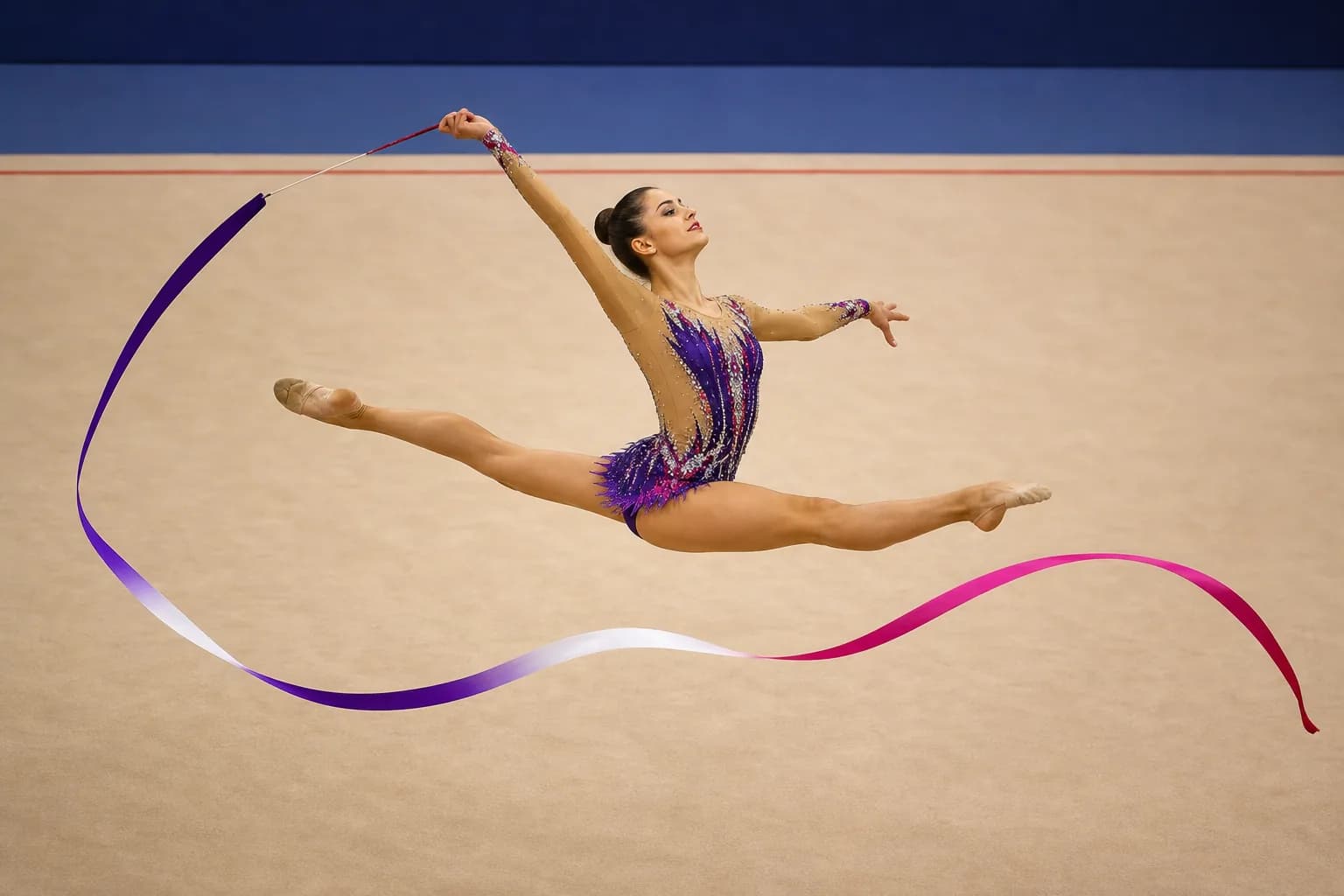
Most lists of girl sports compare schedules, costs, and seasons. This page compares something longer-lasting: what the sport leaves inside her.
Academics, work, friendships, the challenges she cannot yet imagine — all of them draw on the same two things: how strong her mind is, and how strong her body is. They are the core. A gym is where that core is built.
And unlike almost anything else a family can invest in, these two do not fade. The strength she builds now, the sharpness of her focus, the ability of her body to handle pressure and recover from difficulty — these stay with her. Long after the last routine, her body and her mind still carry what was built here. There is no investment in a child's life that lasts longer than this one.
Competitive sport is not for everyone, and every child starts from a different place. That is not a limit — it is a starting point. What she can do today is not the boundary of what she can do tomorrow. That growth does not happen by itself. It happens through training — not to beat anyone, but to be ready for what life puts in front of her.
Families looking at sports for 5 year old girls usually want to know one thing: is five a good age to begin? It is — Level 1 begins at age 5, and earlier and later starting points work too. See what each starting age looks like.
The principle at the heart of it
Learn to Enjoy Training Really Hard
Not to tolerate it. Not to survive it. To enjoy it.
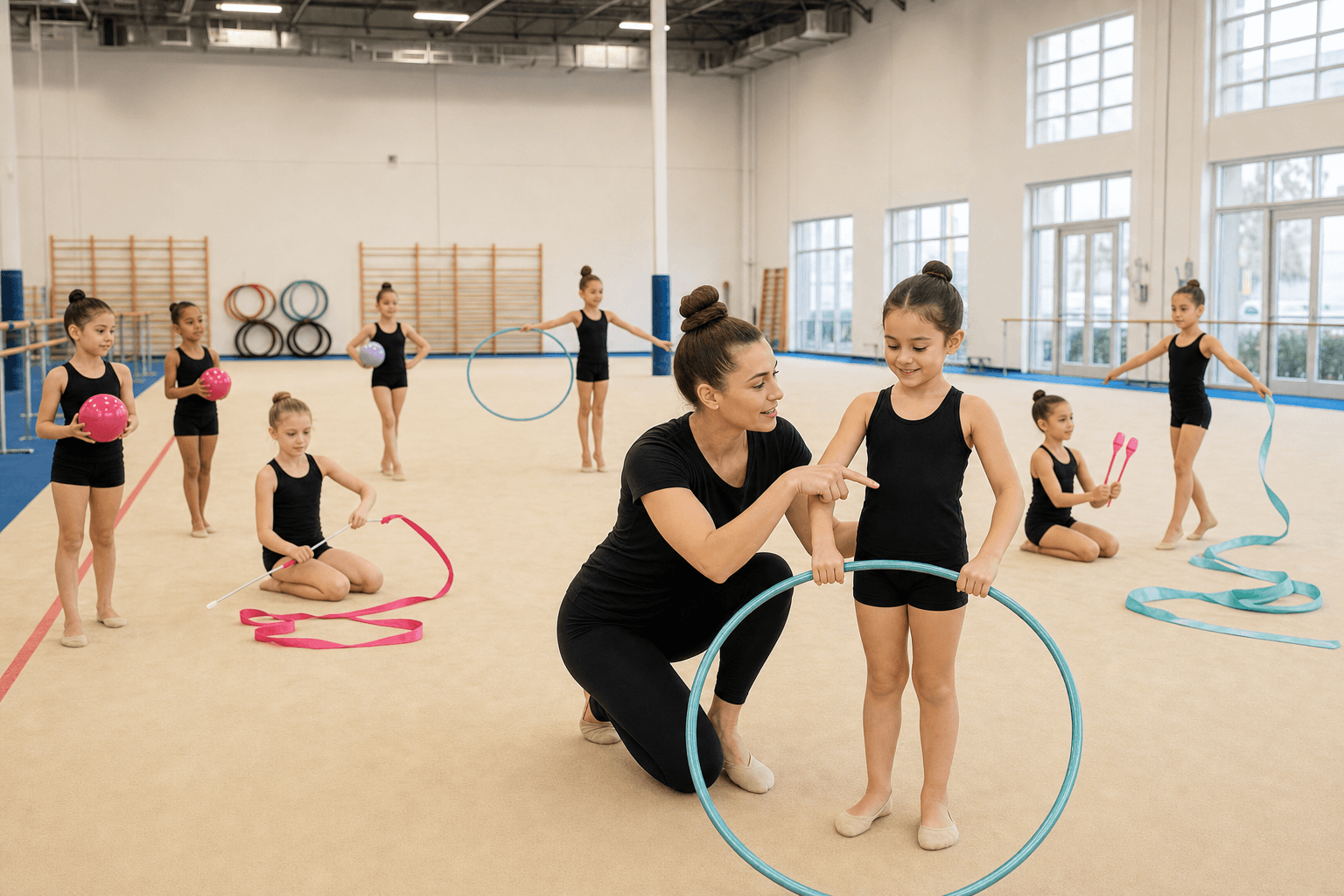
Some days in the gym are hard. Some days she will be frustrated, and some days she will want to stop. Those are the days that matter most, because those are the days that build her — with a coach beside her who knows the difference between a hard day and a wrong plan.
When a child reaches the point where difficult work becomes something she looks forward to rather than something she endures, everything changes. That is the line between athletes who burn out and athletes who grow for years.
It is also a skill that serves her far beyond the carpet, because a person who has learned to enjoy doing hard things stops being afraid of them. Do the dishes? Sure. Help with the groceries? Fine. Take on the tedious school task no one else wants? No problem. Small things — but they all come from the same place: a child who learned to meet effort with willingness, not resistance.
Rhythmic gymnastics is sometimes filed under girly sports, as if the grace came easily. Watch one training hour and you see what the elegance is made of: strength, discipline, and thousands of careful repetitions.
How she is built
A Response System She Carries Everywhere
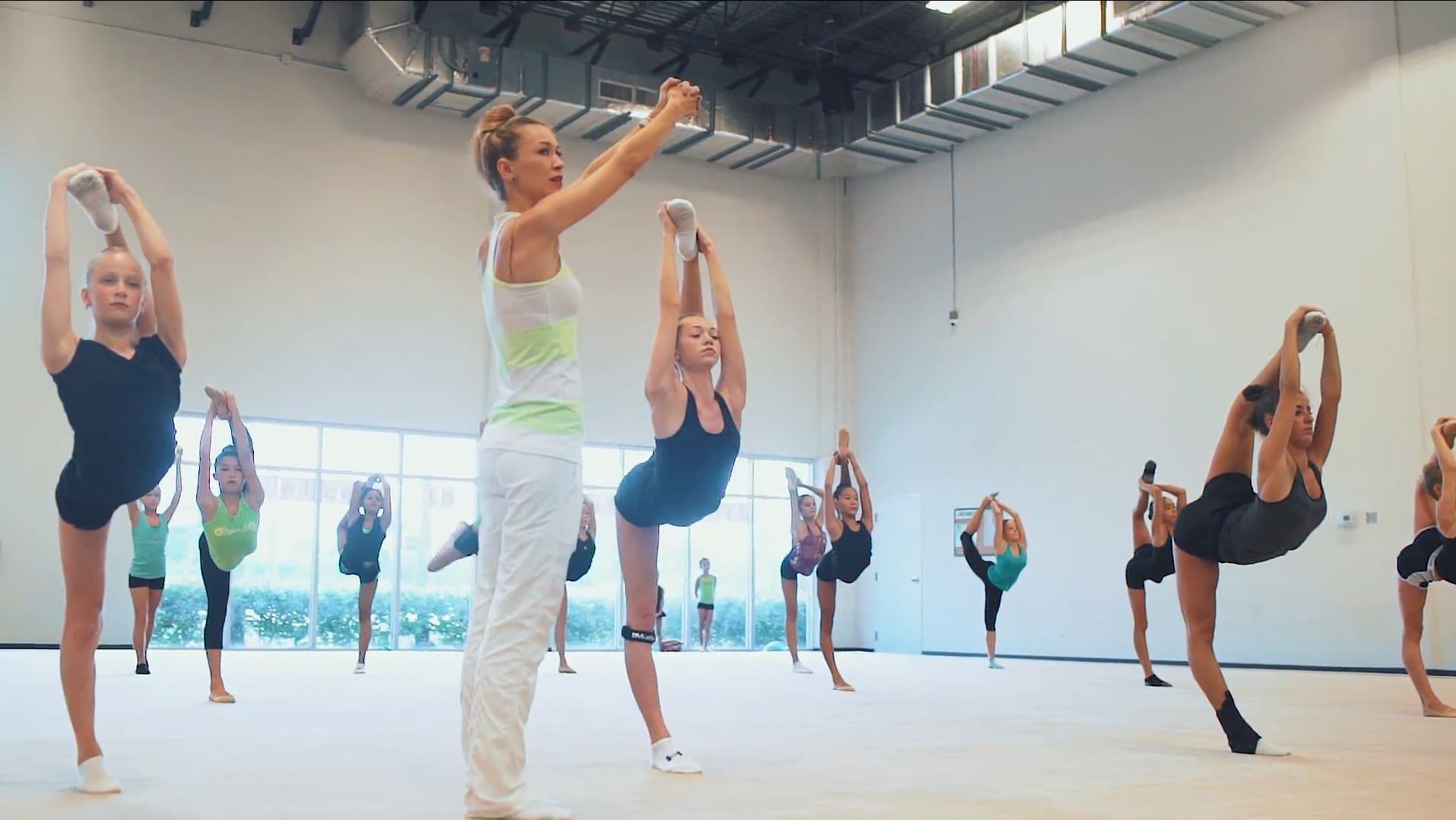
Through training, a child builds what we call her personal response system — the habits that take over when a moment feels too big.
Composure
Staying calm when something goes wrong is a skill she practices, not a talent she is born with.
Focus
She learns to hold her attention on one correction at a time until it becomes hers.
The instinct to try again
She fails in front of her teammates, resets, and goes again. Confidence grows exactly there.
None of this comes from talent, and none of it develops on its own. It is built through experience — showing up on the days she does not feel like it, trying, missing, and trying again. The habits of focus, composure, and determination become automatic because she has used them, over and over, in a place built for exactly that.
What competition is for
She Competes With One Person: Herself
Competition turns toxic when it is about beating someone else. It becomes transformative when a child learns the truth at the center of every great athlete's mindset: you are competing with yourself, and only yourself.
That is what we teach — how to measure progress against her own yesterday, and how to walk into pressure feeling prepared. Not because she is fearless, but because she has already practiced being brave.
The honest timeline
Built Long Before the Moment It Is Needed
The preparation that matters most always happens long before the moment it is needed.
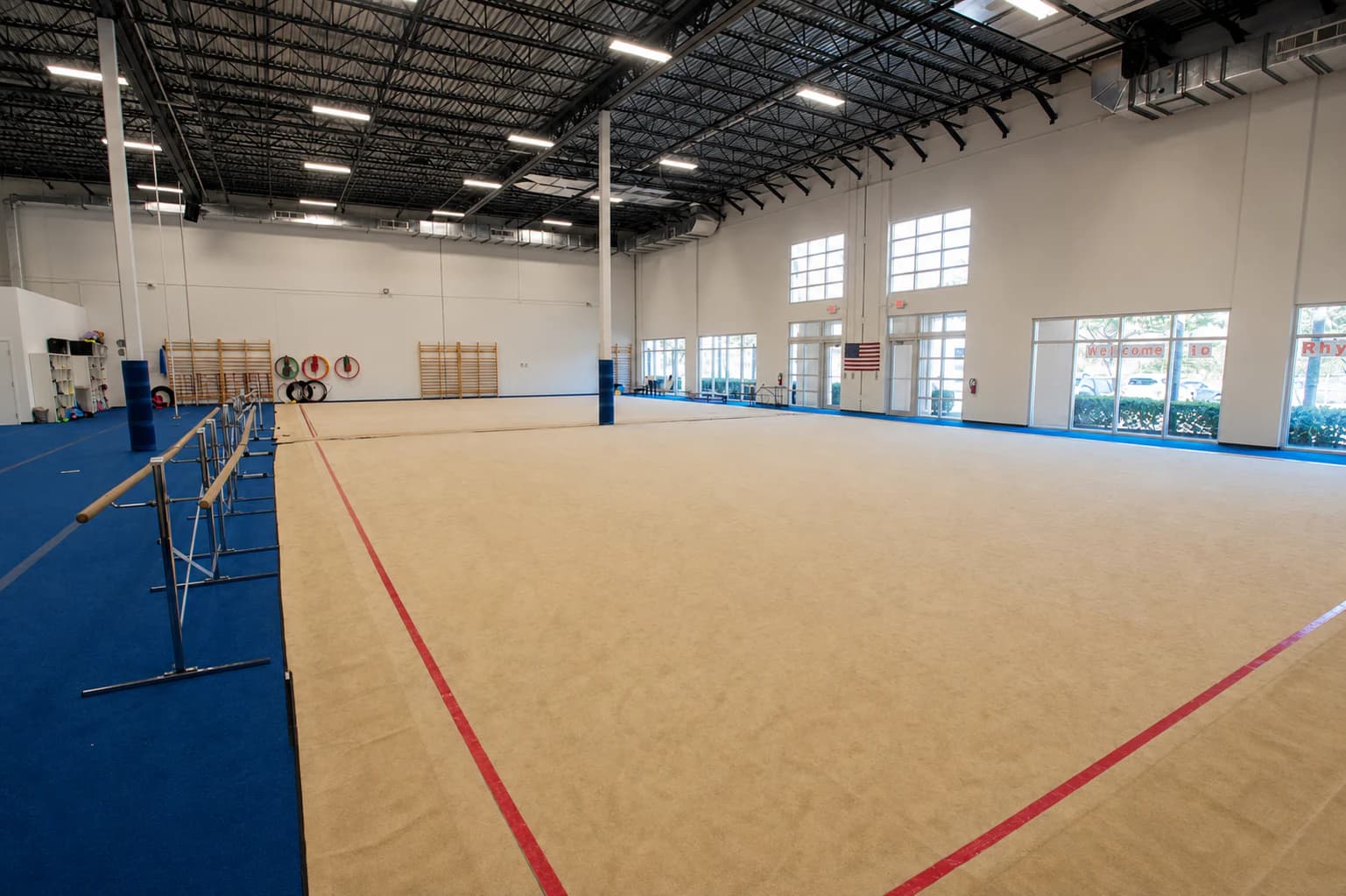
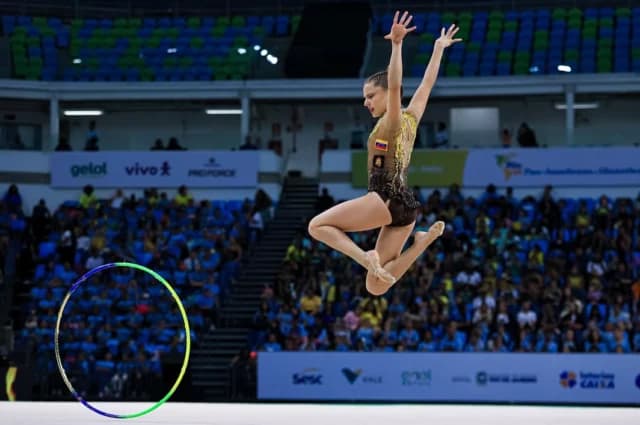
When a gymnast holds herself together at the end of a competition season — performing under pressure, composed when it matters most — that ability was not built in that moment. It was built months earlier, in hours of training when no one was watching and no score was being recorded.
Sometimes the results take longer to show. A full year. Two. That is normal. The skills, the strength, and the mental toughness accumulate even while they are not yet visible. Consistency pays off — but consistency in human growth is not measured in weeks. It is measured in years, and there are no shortcuts.
Consistent training compounds, and long gaps cost real time: what was built has to be rebuilt before new work can begin. That is why the rhythm of a training year matters more than any single week in it.
Your role
Navigate, Don't Push
The athletes who grow the furthest are never doing it alone.
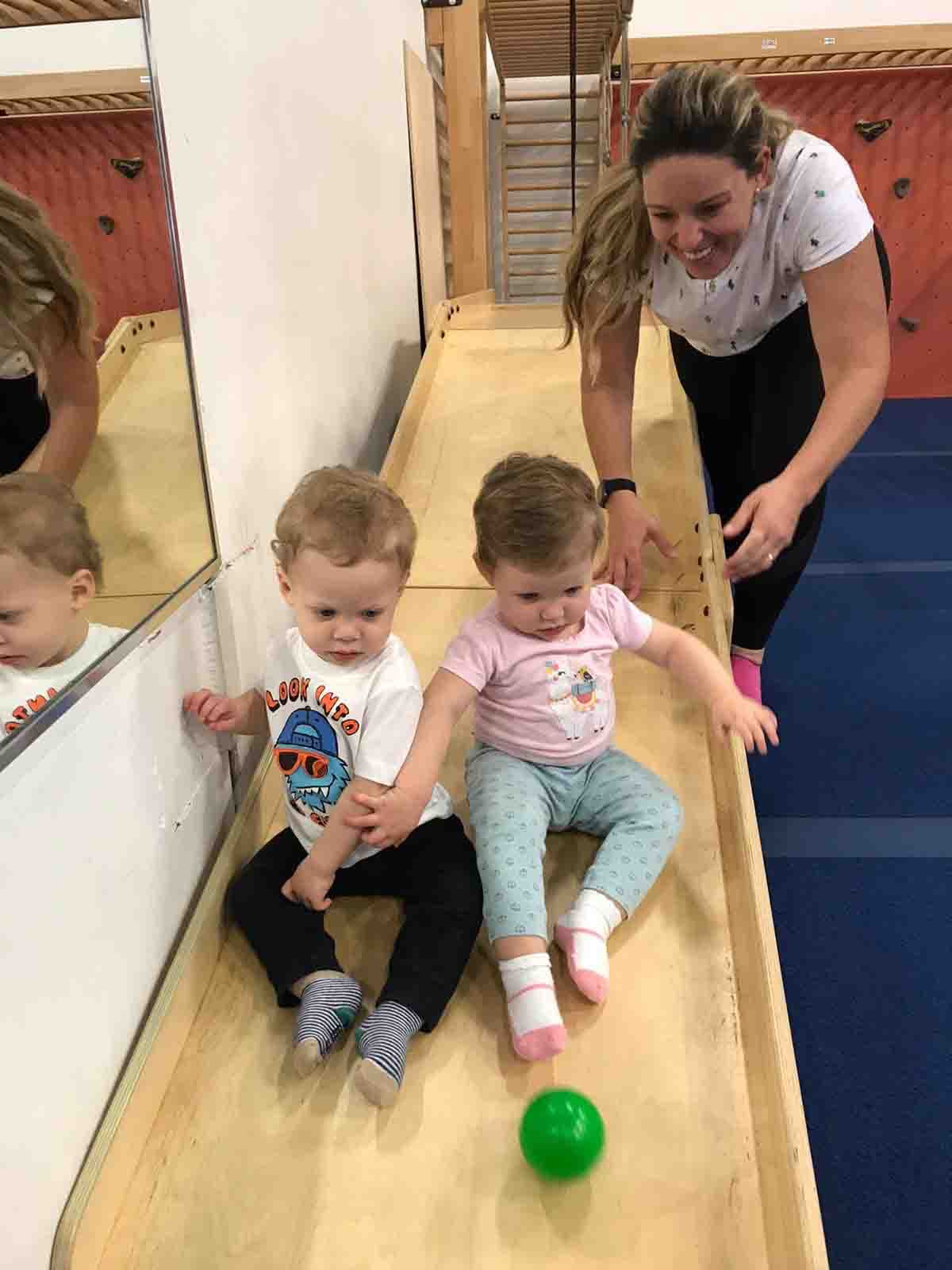
Behind each of them is a parent who was there — not to push, but to navigate. To support on the hard days. To hold steady when the results are not yet visible, trusting that the hard, repetitive daily work is not punishment — it is preparation.
A gymnast who keeps showing up, a family that supports her, and the right coaching environment — growth needs all three, and it needs them consistently. When all three are present, what follows is something no one can take away.
Athletes who grew up in this sport tell us again and again: they did not understand the discipline while it was being built — and as adults they are glad it was, and wish they had more of it. No one looks back and regrets the discipline. What people regret is the growth that was possible and never pursued.
Who teaches her
Coaching Built at the International Level
What our coaches carry today was not built overnight.
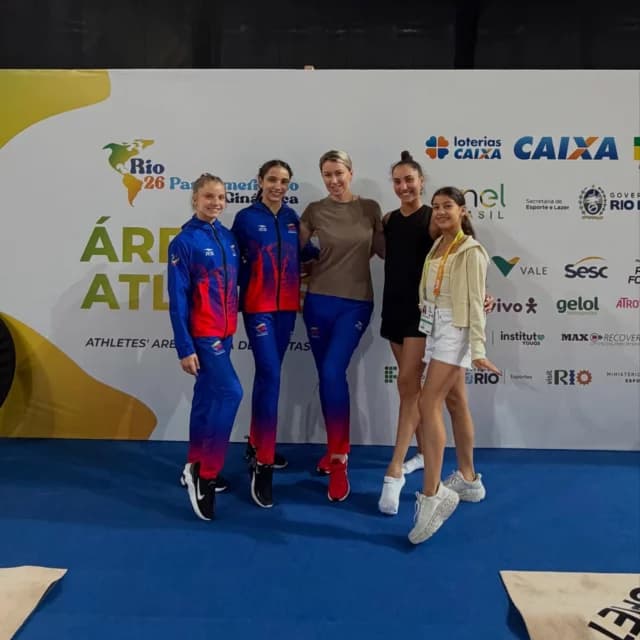
Our coaching team has been building this program since 2011 — fifteen years of work in the sport at its highest levels. Rhythmic Art athletes have competed at the Pan American Games, Grand Prix events, World Cups, and World Championships, and our athletes represent national teams.
That knowledge does not stay locked inside the elite group. It flows into every class and every level — the same understanding of the sport, taught at the pace each child is ready for.
See it for yourself
The First Class Is the Honest Way to Decide
One class tells a family more than any page. The first class is free for new beginners, and questions are welcome any time — by email or through the contact page.
Continue from here
Keep your place in the training journey
Choose the related program or the next useful answer. Every destination gives you a clear route forward and back.